An Indoor Kitchen Garden in a Grow Tent: Start With the Room
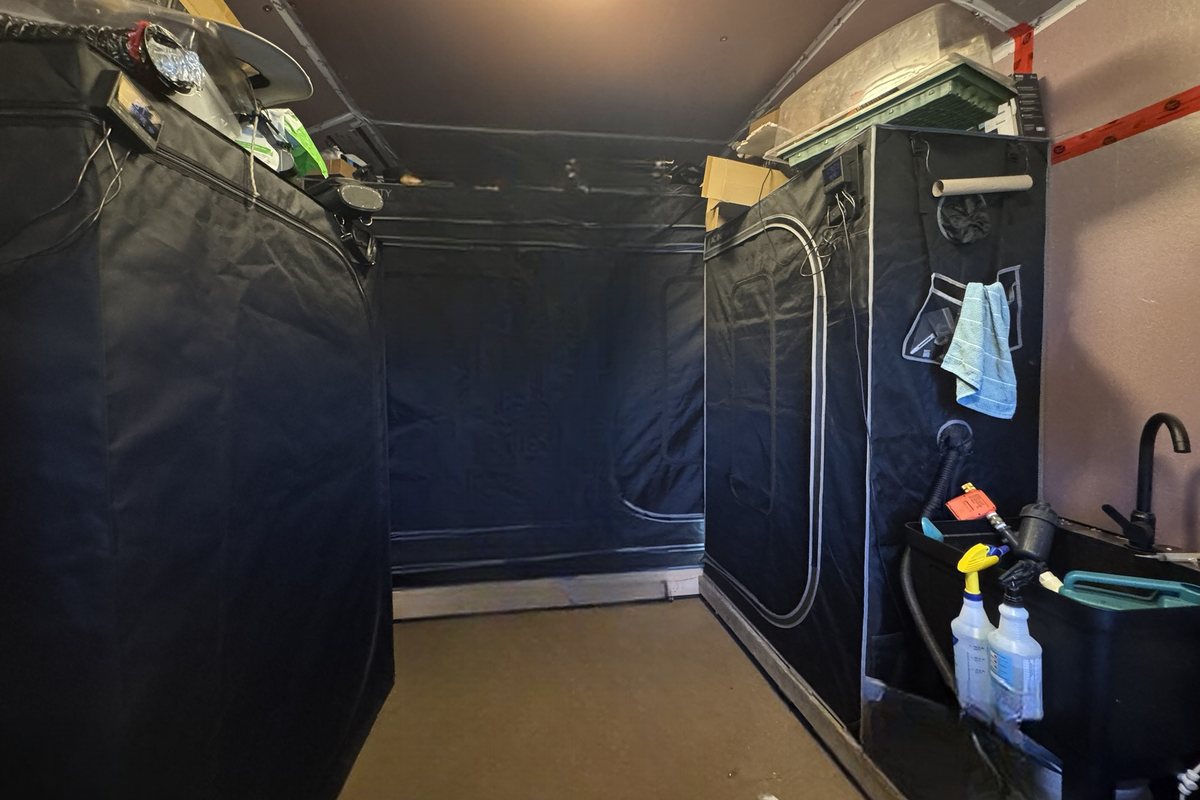
The short version: A grow tent, with a rack of shelves beside it, makes a kitchen garden that runs all year: lettuce, spinach, herbs, and next year's vegetable starts. It is only as good as the room it sits in. Get the space around it steady first. Then start the light low, check water by depth instead of by the surface, let good soil do the feeding, and change one thing at a time. It is also a fine place to start next year's seedlings.
I run my tents in a 10 by 16 foot shed with insulated walls and a mini-split for heating and cooling. The big tent is 4 by 8 feet. I've made most of the mistakes you can make in there, and nearly all of them came from the same place: I was adjusting the tent when the problem was somewhere else.
You don't need most of the gear the internet says you need. You need a steady room, a light you can turn down, a way to water that you have actually watched work, and a notebook.
What is a grow tent, and do you need one?
It's a fabric box with a reflective lining, a light hanging from the top, and a fan that pulls air through. That's it. The box lets you give plants a long bright day in a spot where a long bright day would otherwise be a nuisance, and it keeps the warmth and humidity where the plants are.
You don't need one to grow food indoors. A shelf and a plain light will start seedlings and keep you in salad greens all winter, and our indoor winter growing guide covers that setup. A tent earns its place when you want more control than a shelf gives you.
What can you grow in an indoor kitchen garden?
More than most people expect. Sort your crops by how much they ask for, because that decides where each one lives.
- Lettuce and spinach. The easy wins. They like it cool and they don't need the brightest light in the house. The catch is that both will bolt, which means they quit making leaves and send up a flower stalk, when the days get long or the air gets hot. Spinach is the touchier of the two. Keep them out of the heat, don't give them a longer light day than they need, and buy varieties sold as slow to bolt. Loose leaf lettuce is the best bet indoors, and you can be cutting it in about four weeks.
- Herbs. Parsley, chives, oregano, thyme, and mint are happy in the same cool spot as the lettuce, at 70 degrees and below. Basil is the odd one out. It likes it warmer and brighter, so I'd put it with the tomatoes.
- Tomatoes and peppers. The most demanding. They want warmth, the most light, and room to get tall, so look for compact varieties. A tomato flower can pollinate itself, but it has to be shaken to let go of its pollen, and indoors there's no wind to do it. Once the flowers open, touch the stem of each flower cluster with an electric toothbrush for a few seconds, every other day, around the middle of the day. Touch the stem, not the flower.
That sorting is the whole plan. The cool, easy crops go on open shelves under modest lights. The warm, hungry ones go in the tent.
Why would you want more than one tent?
Because one box can only be one climate. Spinach wants it cool. Basil and tomatoes want it warm. A tray of seeds that just came up wants air so humid it would rot a grown plant. Put all three in one tent and you're picking which one to shortchange.
I run three tents, and that gives me three microclimates. Each one is set up the same way, so each group of plants gets the air it wants instead of a compromise:
- A grow light.
- An exhaust fan that pulls the old air out.
- Circulation fans inside to keep the air and the leaves moving.
- A humidifier on the RO line.
- An AC Infinity controller with the exhaust fan, the humidifier, and the circulation fans plugged into it. It reads temperature, humidity, and VPD, and turns each one up or down to hold the settings I give it. The big tent's controller also runs a small heater.
Here is how mine sort out:
- The nursery. Small, humid, gentle light. Seeds and young seedlings start here.
- The cool one. Lettuce, spinach, and the cool herbs. If your room stays cool on its own, an open rack can do this job.
- The warm one. Tomatoes, peppers, and basil, with the most light.
You don't have to start with three. Start with one tent and a rack, and add a small second tent for seedlings the first time you catch yourself wishing two crops weren't roommates. A second small tent costs less than fighting one big one.
Why does the room matter more than the tent?
Because the tent breathes the room. Every bit of air the fan pulls through came from the space around it. If the room is hot, the tent is hot. If the room is damp, turning the tent fan up just moves damp air faster.
The controller on my big tent has a second sensor outside the tent, so I can see both at once. One evening the tent read 81 degrees and 67 percent humidity while the shed around it sat at 73 degrees and 50 percent. The tent can only start from what the shed gives it.
I learned this with a dehumidifier. The shed was too humid, so I put a 34 pint dehumidifier in it. It pulled the water out, and it also dumped so much heat into the shed that the mini-split couldn't keep up. I took it back out. The machine fixing one number was wrecking another.
Here's the thing: temperature and humidity are tied together. Warm air holds more water than cool air. When the light shuts off and the tent cools down, the humidity climbs even though no water was added. So the reading that matters is often the one in the middle of the night, when you're not looking.
One more piece. My tents push their air outdoors. Air that leaves has to be replaced, so the shed needs a way for fresh air to come in. If the tent walls are sucking inward hard, the fan is starving.
What is VPD, and why does every plant care?
VPD stands for vapor pressure deficit. Forget the name. It's a measure of how thirsty the air is, or how hard the air is pulling water out of the leaves.
This matters for every plant you will ever grow, lettuce and tomatoes included. A plant moves water and food by letting water evaporate from its leaves, and the air sets the pace. Air that pulls too hard and the plant droops and crisps at the edges even with wet roots. Air that barely pulls and the plant sits there, the soil stays soggy, and mold moves in.
Here's why you can't just watch the humidity number. At 65 percent humidity, a 68 degree tent has a VPD of about 0.8. At the same 65 percent, an 86 degree tent is about 1.5. Same humidity reading, nearly twice the pull on the plant.
The right number depends on the plant and how old it is:
- Seeds just up and cuttings with no roots yet: low, about 0.3. That's very humid air, around 89 percent at 73 degrees. Once they've rooted, anywhere from 0.3 to 0.7 works, and bringing it up gives the roots a reason to work.
- Established food crops: about 0.5 to 1.1, the range a tomato study landed on. Inside that, 0.7 to 0.8 is the value growers most often aim for.
Go too high and the leaves lose water faster than the roots can bring it up, and the plant wilts. Go too low and the leaves can barely give off water at all, so the plant can't move water and food up from the roots.
You don't have to do the math. Most tent controllers show VPD, and there are free charts online where you find your temperature on one side and your humidity on the other. If you want it anyway:
saturation pressure (kPa) = 0.6108 × e^(17.27 × T ÷ (T + 237.3)), with T in °C
VPD (kPa) = saturation pressure × (1 − humidity ÷ 100)
Quick note: the number is a guide, not a grade. Treat these ranges as a starting point and let the plants tell you the rest.
How bright should the light be?
Lower than you think, at least at the start. A plant that was just moved to a new pot has a small root system. It can't use all the light a modern LED can throw, and pushing it just stresses the plant.
Light at the leaves is measured in PPFD. Think of it as how hard it's raining light on the plant right now. After a transplant I turn the light down, and I bring it back up only after I see new growth.
Don't go by the dimmer dial. I have two different brands of light in the same tent, and to get the same reading at the leaves I have to set them to different numbers on the dial. Fifty percent on one light is not fifty percent on another. So measure. You don't have to buy a light meter to do it. Photone is a phone app that uses the camera as a light meter and gives you PPFD and DLI right on the screen. It needs a diffuser over the camera to read right, and the app shows you how to make one from a piece of printer paper in about a minute. Then measure at the top of the plants in several spots, not just the middle.
Different crops want different amounts. The useful number here is the total light a plant gets in a day, which growers call DLI. You get it by multiplying the PPFD by the hours the light is on, then by 0.0036. For vegetable seedlings, researchers writing for Purdue's Vegetable Crops Hotline suggest:
- Lettuce, cabbage, cucumber, and squash: a DLI of 10 to 15. With the light on 16 hours, that's roughly 175 to 260 PPFD at the leaves.
- Tomato, pepper, and eggplant: a DLI of 15 to 20. With the light on 16 hours, roughly 260 to 350 PPFD.
For lettuce and spinach you're growing to eat on a 14 hour day, the same 10 to 15 works out to about 200 to 300 PPFD. Seedlings that get too little light tell you: they come up tall, thin, and weak, with poor roots.
Quick note: as plants grow taller they get closer to the light, so the light at the leaves goes up without you touching anything. Measure again when the plants have put on height.
How do you water without guessing?
I only hand water new transplants. Everything else is watered by a wicking system I built, and it's the part of this setup I'd build again first.
Here's how it goes together:
Fabric pots on a wicking mat. The pots sit up on a raised platform with a wicking mat under them. The tail of the mat hangs down into a tray of water below. Water climbs the mat and soaks into the bottom of the pot, the same way a paper towel pulls up a spill.
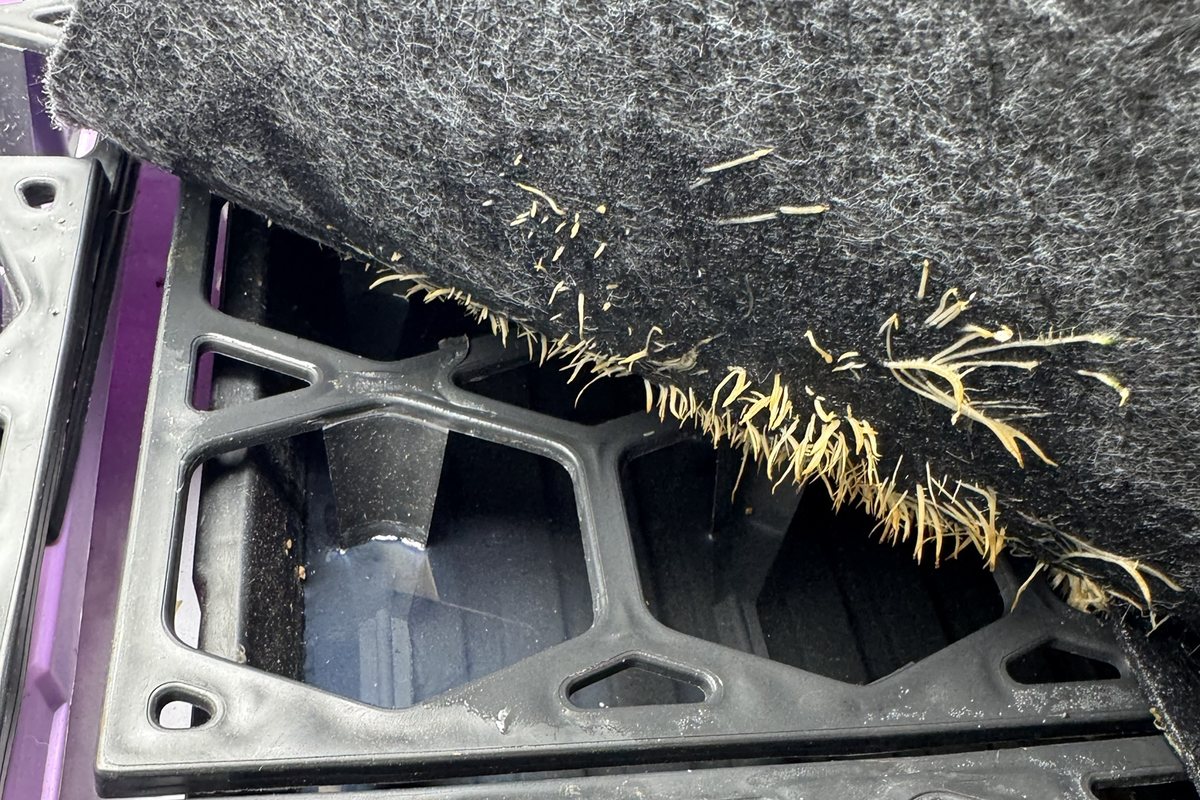
A tray that refills itself. Each tray has a float valve, the same idea as the one in a toilet tank. When the water drops, the valve opens. When it's full, the valve shuts.
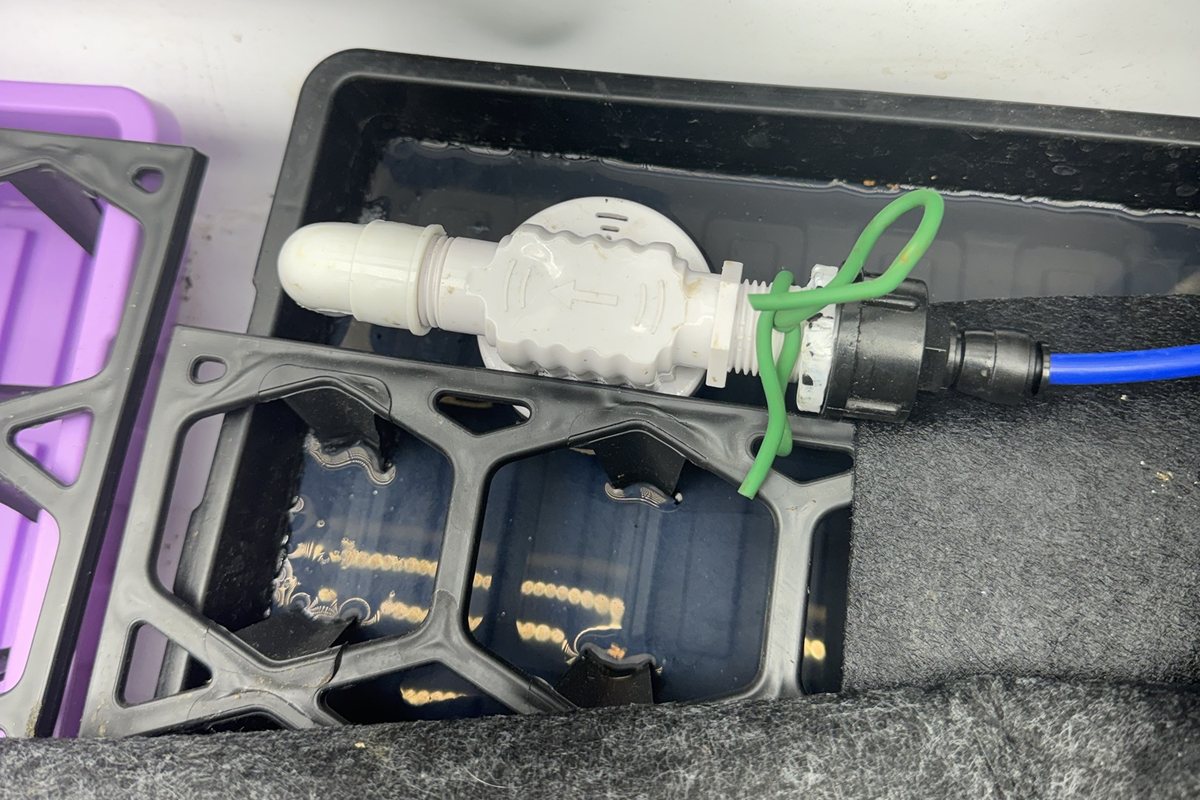
Plumbing instead of pitchers. The trays are plumbed to a multizone water timer, the kind sold for garden hoses, so nobody carries water to the tents. One zone is tap water run through a filter that takes out the chlorine, and that zone feeds the plants.
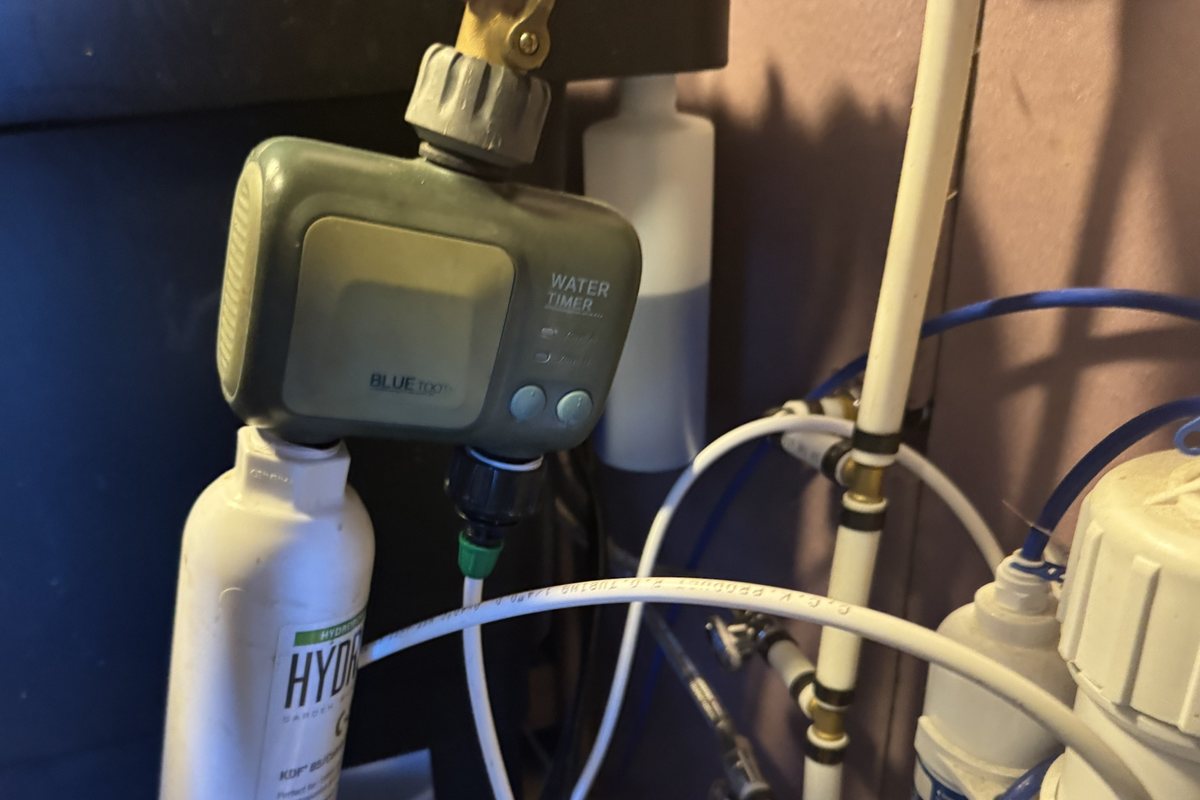
Apps to check on it. I can look at my phone and see what the tents are doing without opening a door. The AC Infinity app covers temperature, humidity, and the fans. The Spider Farmer app runs the lights. The water timer has its own app for the zones.
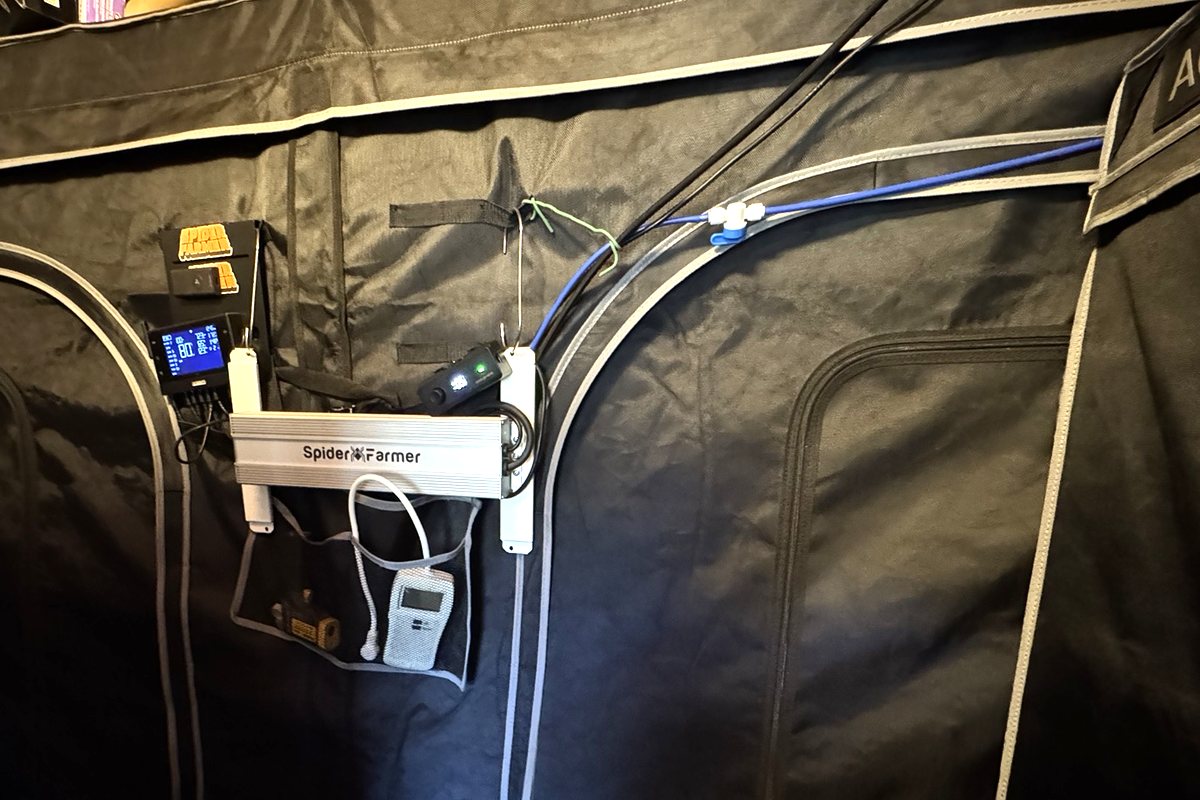
The plants drink from the bottom up, as much as they want, when they want it. The soil stays evenly moist instead of swinging between soaked and dry.
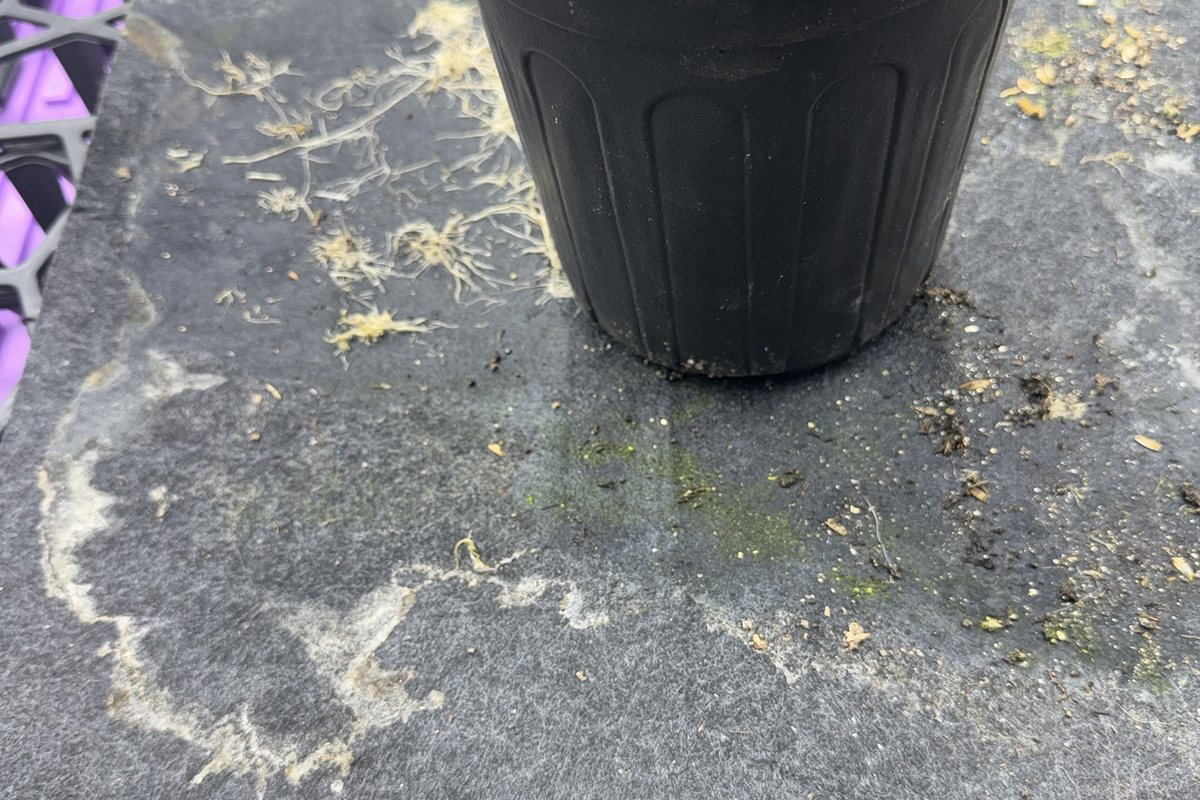
Another zone on that timer feeds the humidifiers, and that line carries RO water, which is water run through a reverse osmosis filter. Here's why. Tap water has minerals in it. A humidifier turns the water into mist and the minerals come along for the ride, so you get white dust on the leaves and crust inside the machine. RO takes most of the minerals out, so the humidifier runs clean and I'm not scrubbing it or hauling jugs to it.
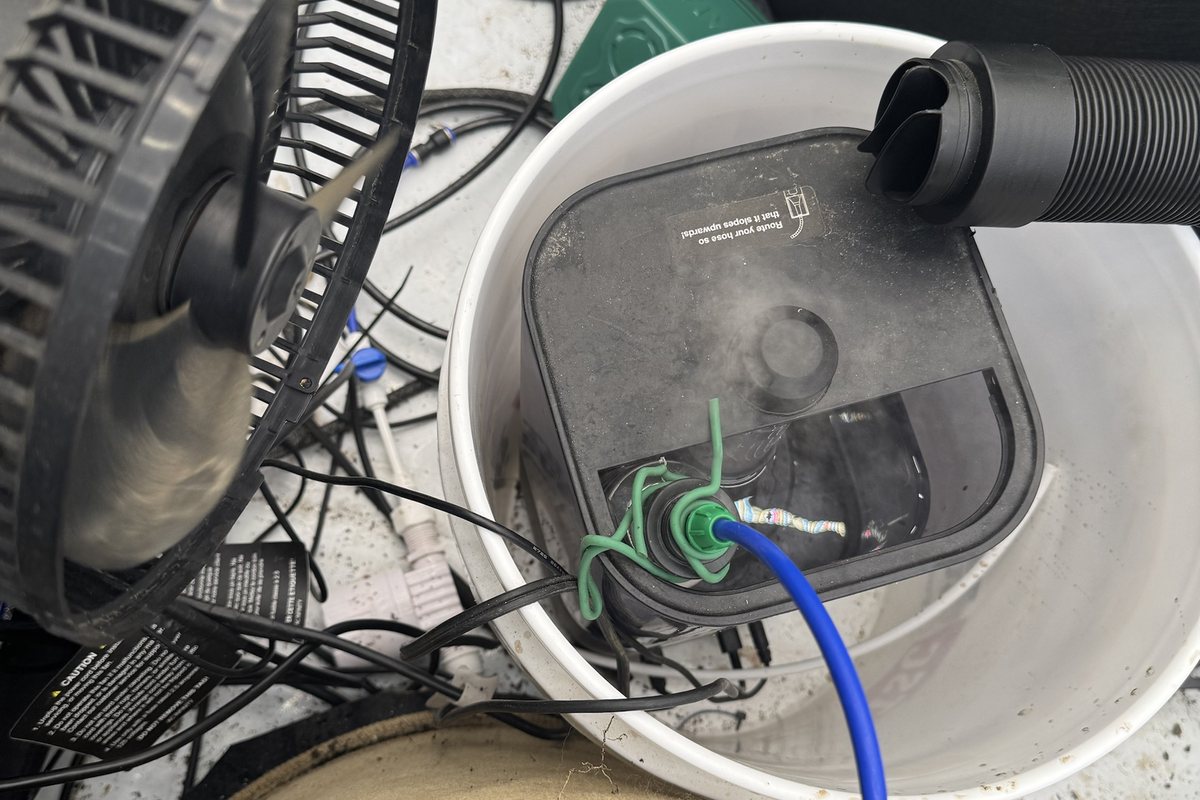
The plants themselves don't get RO, though. Tap water with the chlorine filtered out is fine for them.
It also fooled me twice.
First, the trays were running dry before the next refill. The timer said the plants were being watered. The plants said otherwise. The schedule you set is not what the plant needs. Mark the water level, see how much is gone after a full day and night, and size the refill to that with some room to spare.
Second, the top inch of soil would look dry and crumbly while everything below it was still moist. If I had gone by the surface I would have drowned them. Push a finger down a few inches, or lift the pot and feel the weight, before you add water from the top. It's the same finger test from our watering guide, and it matters even more in a pot.
The one time I water by hand is right after a transplant. I turn the wicking off for that pot and use a watering can for a while. A small root ball in a big pot of wet soil just sits in a swamp. Once the roots have spread out, the wicks go back on, and I watch the first couple of refills to make sure the water is really moving.
Water and electricity share that tent. Plug into a GFCI protected outlet. Keep power strips and plugs up off the floor, with a dip in every cord so water runs off before it reaches the plug. And set up any automatic watering so that a stuck valve floods a tray, not the building.
Do you need bottled fertilizer?
I don't use it on a schedule. I grow in soil that I reuse from round to round and build back up with compost, worm castings, and dry organic amendments. The soil does the feeding, and I mostly give plain water.
Water only doesn't mean nutrient free. It only works if the food is already in the soil. If the plants look pale and slow, something is missing, and no slogan will fix that.
The trap with reused soil is adding the same thing every time out of habit. I had batches that had already been given minerals several times over. On one round I left them out on purpose, because minerals build up. Keep a list of what went into which pot and when. A soil test beats a guess.
Change one thing at a time, or you'll never know what fixed it.
Can you start next year's seedlings in it?
Yes, and for a vegetable gardener this may be the best reason to own one. Late winter is when tomatoes, peppers, and the rest of the warm-weather crops need to get started, and it's exactly when a windowsill has the least to offer. A tent gives seedlings a steady temperature and a long bright day no matter what's happening outside.
The timing doesn't change because you have a tent. Find your last frost date, read the seed packet, and count back the number of weeks it tells you. Our zones and frost dates guide gets you the date, and the seed starting guide covers sowing depth and potting up.
Everything above still applies, just smaller. Start the light low, since a sprout has even less root than a transplant. Leggy, stretched stems mean they want more. Pale or bleached tops mean they're getting too much. Keep a small fan moving the air, and water by weight and depth, not by how the surface looks.
The tent doesn't have to hold everything, either. Pair it with a multilevel rack out in the open room, with a light over each shelf. The less needy seedlings go on the rack alongside the salad greens: lettuce, kale, onions, cabbage, and anything else that's happy at room temperature under a modest light. That frees the tent for the ones that want the warmth and the bright light, like tomatoes and peppers. A rack with four or five shelves holds a lot of trays in the floor space of one.
Look, I get it. Seedlings raised in a tent look so good that it's tempting to carry them straight out to the garden. Don't. They have never felt wind or real sun. Harden them off over a week or so, a little more outdoor time each day, before they go in the ground.
How do you set one up the first time?
- Pick the room first. Somewhere you can hold a steady temperature and humidity. Everything else follows from this.
- Sort out power and water. GFCI outlet, cords and strips off the floor, and a plan for where a leak would go.
- Give the air a way in and out. Run the exhaust fan, make sure fresh air can get into the room to replace it, and add a small fan inside. You want the leaves moving gently, not whipping around.
- Start the light low. Hang it, turn it down, and bring it up over days as the plants root in.
- Run it empty for a day. Watch the temperature and humidity through a full day and night before a plant goes in. Look hardest at the hour after the light shuts off.
- Start a notebook. Write down the settings, what you added to the soil, and every change you make.
What should you check every day?
It takes about five minutes once it's a habit.
- The plants. Are the leaves up and a good color? Is there new growth? Flip a few leaves over and look underneath.
- The water. Is there water in the trays or reservoir, and is any of it on the floor?
- The air. Are the fans running? What did the temperature and humidity do overnight?
- The room. Is the space around the tent holding steady?
And when a number looks wrong, check the thermometer before you change anything. I once had two sensors in the same spot reading 72 and 66 degrees. Put them side by side for a while and see which one you believe.
A yellow sticky card hung near the soil will tell you if fungus gnats have moved in. A clean card is good news, though it doesn't prove the soil is clear.
Where the facts in this guide come from: Purdue University Vegetable Crops Hotline for the daily light numbers, University of Illinois Extension for lettuce and herbs indoors, University of Delaware Extension for bolting, UConn Extension for tomato pollination, and the EPA for minerals in humidifier water. The VPD ranges come from Greenhouse Management for seedlings and cuttings, and Science in Hydroponics for established crops.
Frequently asked questions
Do I need a grow tent to grow food indoors?
No. A shelf and a plain light will start seedlings and grow greens. A tent earns its place when you want to hold the temperature and humidity steady, or keep a bright light from taking over the room.
What vegetables and herbs grow well indoors under lights?
Lettuce, spinach, parsley and chives are the easiest. They like cool air, 70 degrees and below, and modest light, so they do fine on open shelves. Keep the lettuce and spinach out of the heat so they don't bolt. Basil, tomatoes and peppers want more warmth and more light, which is what the tent is for.
Do I need more than one grow tent?
Not to start. One tent can only hold one climate, though, and seedlings, cool crops like spinach, and warm crops like tomatoes each want different air. I run three tents for three microclimates: a humid nursery, a cool one for greens, and a warm one. A good first step is one tent plus an open rack, then a small second tent for seedlings.
Where should a grow tent go?
In a room you can keep at a steady temperature and humidity. The tent pulls its air from the room around it, so a hot or damp room makes a hot or damp tent no matter how the fans are set.
What is VPD and does it matter for vegetables?
VPD, or vapor pressure deficit, is how hard the air is pulling water out of the leaves. It matters for every plant, not just the fussy ones. It combines temperature and humidity into one number, which is why the same humidity reading can be fine in a cool tent and too dry in a warm one. Seedlings and unrooted cuttings want it low, about 0.3 kPa, and established food crops about 0.5 to 1.1.
How bright should a grow light be for young plants?
Lower than you think. A plant with a small root system can't use all the light a modern LED puts out. Turn the light down after a transplant and bring it up only after you see new growth. Go by a measurement at the leaves, not by the percentage on the dimmer.
How often do you water plants in a grow tent?
When the pot needs it, not when the surface looks dry. The top inch can be dry and crumbly while the roots below are still moist. Push a finger down a few inches or lift the pot before you add water.
Can I start seedlings for the outdoor garden in a grow tent?
Yes, and it may be the best use of one. A tent gives seedlings steady warmth and a long bright day in late winter, when a windowsill gives them neither. Count back from your last frost date to pick the sowing day, keep the light low at first, and harden the seedlings off before they go outside.
Do plants in a grow tent need bottled fertilizer?
Not if the soil is doing the feeding. I grow in reused soil built up with compost, worm castings and dry organic amendments, and I mostly give plain water. Write down what you add so you don't put the same mineral in three rounds in a row.
Start with the room. There are more plain-English guides at organicgardeningcollective.com whenever you want them.
Start with seeds
A tent is only as good as what goes into it. Lesson 3 of the Beginner's Curriculum covers starting seeds indoors from scratch.