Growing Fresh Food All Winter, Indoors
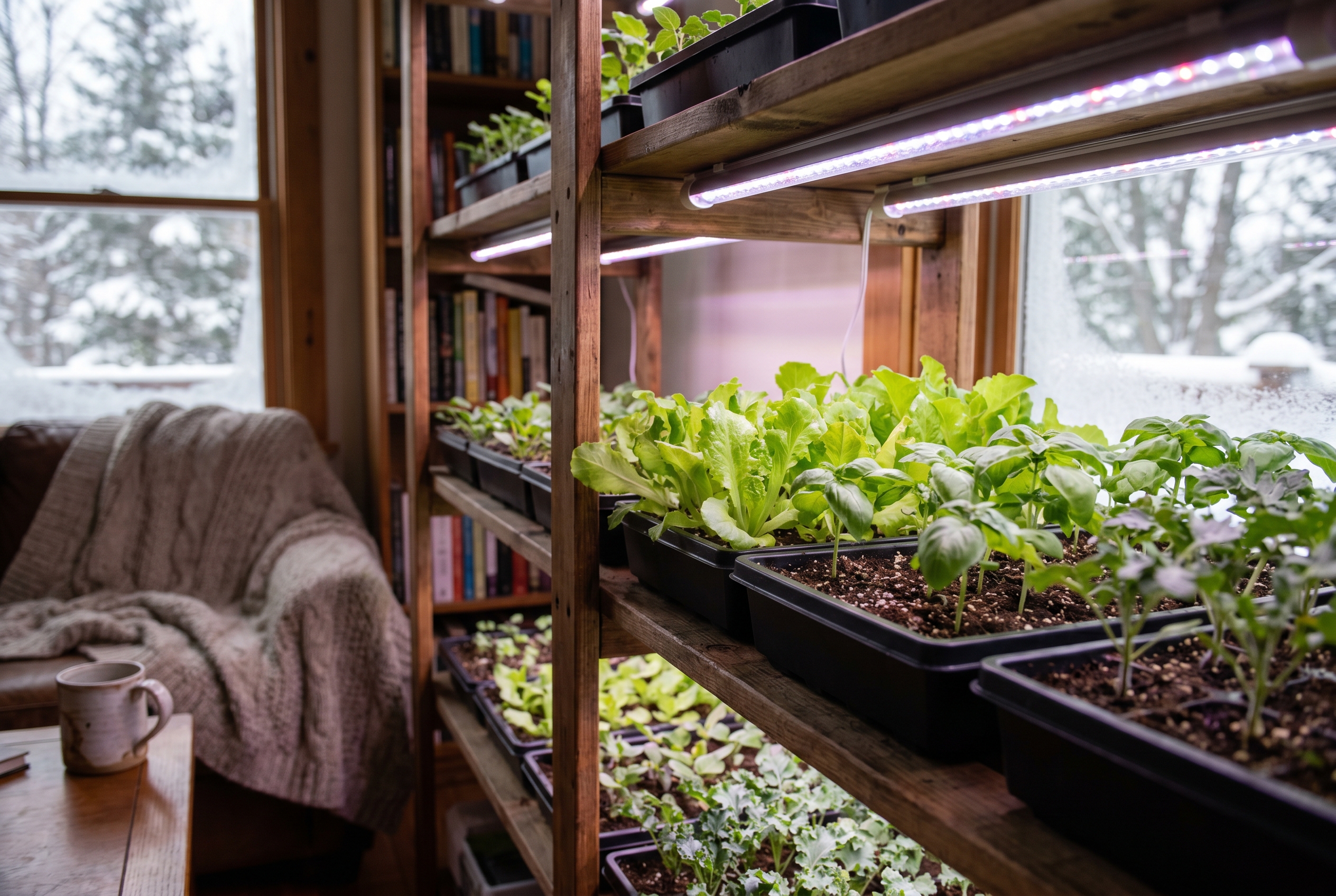
The short version: you can absolutely grow fresh food indoors through winter — just keep your ambitions leafy. Herbs, salad greens, microgreens, sprouts and green onions thrive on a windowsill or a small shelf; tomatoes, peppers and other fruiting crops do not. Give your greens enough light (a bright window often isn't enough in deep winter, so a cheap grow light on a timer helps), a warm room, and only as much water as they actually need, and you'll be snipping fresh leaves while it snows.
Winter is the season most beginners assume the growing is over. It doesn't have to be. The trick is to stop trying to recreate summer and instead lean into the crops that are genuinely happy indoors. They're the fast, forgiving ones — and they happen to be the fresh flavors you most miss in the cold months.
What's realistic indoors — and what isn't
Be honest about light, and indoor winter growing becomes easy. Plants that grow leaves are far less demanding than plants that grow fruit. A lettuce leaf or a sprig of basil only needs to make foliage; a tomato needs enough energy to flower and ripen fruit, which takes a great deal more light than any winter window offers.
Realistic indoors in winter:
- Herbs — basil, parsley, chives, mint, cilantro.
- Salad greens — leaf lettuce, spinach, arugula, mustard greens.
- Microgreens — radish, broccoli, pea, sunflower, harvested young.
- Sprouts — grown in a jar, no soil and no light needed at all.
- Green onions (scallions) — regrown from the root ends you'd normally toss.
Best saved for spring: tomatoes, peppers, eggplant, cucumbers, squash and most root vegetables. They can be done indoors with serious lighting, but they'll frustrate a beginner. Start with the easy wins and add ambition later.
The three things indoor crops need
Forget anything complicated. Indoor winter growing comes down to three things, in order of importance.
1. Enough light
This is the one that trips people up. A bright south-facing window feels sunny to us, but winter daylight is short and the sun sits low, so it's often not enough for a plant. The telltale sign is leggy growth — seedlings stretching tall and pale and leaning hard toward the glass. The fix is cheap: an inexpensive LED or shop grow light, hung a few inches above the plants and set on a plug-in timer to run about 12 to 14 hours a day. You don't need a fancy horticultural rig — a basic LED shop light does the job for greens and herbs.
2. Warmth
Most herbs and greens are happy at normal indoor room temperature — roughly the comfortable range you keep your home at. Seeds sprout faster in a warm spot, so keep trays away from cold, drafty windowsills and unheated rooms until they're up and growing.
3. Not too much water
Indoors, far more plants die from overwatering than from drought. Pots dry out slowly in cool winter rooms, and soggy soil suffocates roots and invites mold. The rule is simple: water only when the surface of the mix feels dry to the touch, then water until it just drains from the bottom; our guide to watering without guesswork covers the same finger test outdoors.
A simple shelf setup
You don't need a greenhouse — a corner of a room will do. Here's a setup that has never let me down:
- A shelf or table near an outlet. A spare bookshelf is perfect.
- Containers with drainage holes — yogurt tubs and takeaway trays with holes poked in the bottom work fine. Set them on a tray to catch drips.
- A light, well-draining potting mix. Don't dig up garden soil; it's too heavy and compacts in pots. The same seed-starting mix from our indoor seed starting guide works well here too.
- A grow light on a timer hung a few inches above the plants, raised as they grow. Set the timer once and forget it.
If you only do one thing differently from your summer garden, make it this: water less. Indoor pots in a cool room stay damp for days, and a thirsty-looking plant is more often drowning than dry.
The cheapest harvest in the house. Before you buy a single seed, stand the root ends of a bunch of green onions in a glass of water on the sill. In a few days you'll have fresh green tops regrowing — proof that winter growing works, for the price of scraps you were going to compost anyway.
Five forgiving crops to start with
Leaf lettuce
Loose-leaf varieties (not tight heads) are made for indoors. Sow a small pot thickly, keep it in good light, and start snipping outer leaves once they're a few inches tall. It regrows again and again.
Spinach
A cool-season green that actually appreciates a slightly cooler room. Sow a half-inch deep, keep it evenly moist, and pick the outer leaves young and tender. Like lettuce, it'll keep giving if you don't strip the whole plant.
Herbs (basil & parsley)
Basil wants warmth and the brightest light you can give it — it's the herb most likely to ask for a grow light in winter. Parsley is more patient and tolerates lower light, though it's slow to germinate, so be patient. Snip from the top of each plant to keep them bushy rather than leggy.
Microgreens
The fastest win of all. Sow seeds thickly across a shallow tray of moist mix, keep them lightly watered and in good light, and in roughly one to three weeks they're ready. Snip the whole tray at soil level with scissors when they're a couple of inches tall, first true leaves and all.
Green onions from scraps
Save the white root ends, stand them root-down in an inch of water in a glass, and change the water every couple of days. Fresh green tops regrow within days. For a longer harvest, move the regrown roots into a small pot of soil once they're going.
Harvesting: cut-and-come-again
The single habit that keeps fresh food coming all winter is cut-and-come-again harvesting. Instead of pulling up the whole plant, snip the outer leaves with scissors and leave the small center leaves to keep growing. Lettuce, spinach, arugula and most herbs will regrow for several rounds this way, which means one sowing feeds you for weeks. Harvest a little and often, and sow a fresh pot every couple of weeks so there's always a new batch coming up behind the one you're eating.
Frequently asked questions
What vegetables can I grow indoors in winter?
The reliable winners are leafy and fast: leaf lettuce, spinach, herbs like basil and parsley, microgreens, sprouts, and green onions regrown from scraps. Fruiting crops like tomatoes and peppers need far more light than a winter windowsill gives, so save those for spring.
Do I need a grow light?
Often, yes. A bright window usually isn't enough in deep winter, and you'll get leggy, stretched plants. An inexpensive LED or shop grow light on a timer (about 12–14 hours a day) makes things far more dependable. Sprouts are the exception — they need no light at all.
How much light do indoor greens need?
Roughly 12 to 14 hours of bright light a day. Winter days are short and the sun is low, so a grow light usually fills the gap. If plants lean hard toward the window or grow tall and spindly, they want more light.
Can I regrow green onions from scraps?
Yes — it's the easiest indoor crop there is. Stand the white root ends in a glass with an inch of water on a sill, change the water every couple of days, and snip the fresh tops as they regrow.
What are microgreens and are they easy?
Microgreens are vegetable and herb seedlings harvested very young, usually one to three weeks after sowing. Sow thickly on a shallow tray of moist mix, keep them watered and in good light, and snip the whole tray when they're a couple of inches tall — about as easy as growing gets.
Make this part of your gardening year
Indoor winter growing pairs beautifully with the Beginner's Curriculum. Learn to start seeds and stretch your outdoor season, and you'll have fresh food on the table in every month. Explore the full guides library, or keep your outdoor beds going longer with our season-extending guide and dial in your watering.