Soil 101: The Squeeze Test for Your Garden
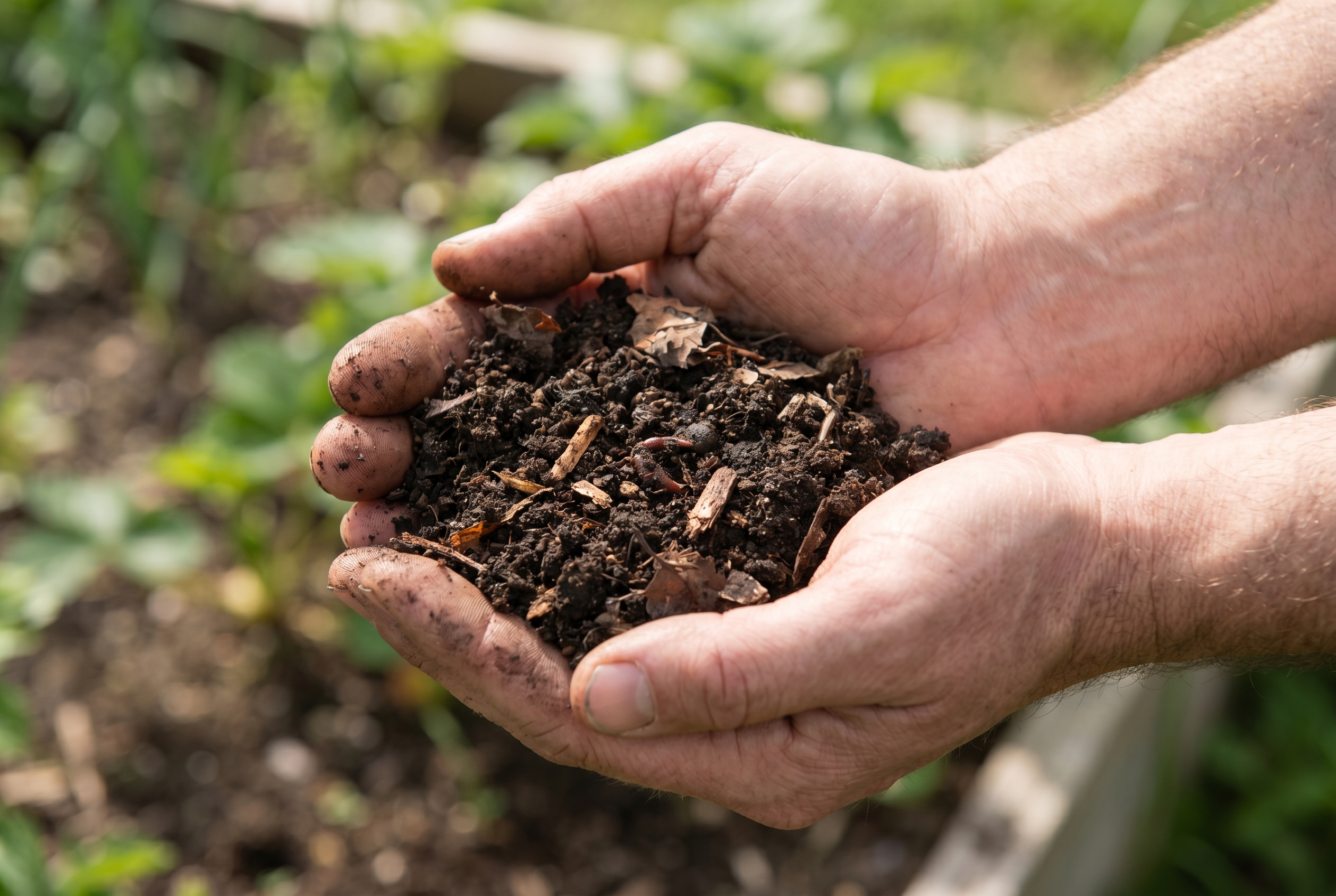
The short version: grab a handful of soil, moisten it, squeeze it, and try to press it into a ribbon between your thumb and finger. Sand crumbles and won't hold together, silt feels smooth and floury, clay forms a long sticky ribbon, and loam holds loosely then breaks. That crumbly loam is the goal — and whatever you have now, adding compost moves you toward it.
This is Lesson 2 of the Beginner's Curriculum, and it might be the most useful five minutes you ever spend in the garden. Before you choose plants, set a watering routine, or worry about fertilizer, it pays to know what your soil actually is. The good news: you don't need a kit or a lab. Your own two hands will tell you almost everything you need to know.
Why soil texture matters
"Texture" just means the mix of particle sizes in your soil — how much is sand, how much is silt, and how much is clay. Those three particles behave very differently, and the balance between them quietly decides how your garden behaves.
- Drainage. Sand has big particles with big gaps, so water races straight through. Clay has tiny particles packed tight, so water sits. Texture is the difference between soil that dries out by lunchtime and soil that stays a swamp for days.
- Nutrients. Clay and organic matter hold onto nutrients like a magnet; sand lets them wash away with the water. That's why sandy beds get hungry fast.
- Workability. Loamy soil crumbles in your hand and is a pleasure to dig. Heavy clay turns to concrete when dry and glue when wet, and timing your digging suddenly matters.
Knowing your texture turns guesswork into confidence. It tells you how often to water, how much compost to add, and which jobs to tackle when the soil is in the right mood for them.
Meet the four soil types
Nearly every garden soil is a blend, but it usually leans toward one of these:
- Sandy soil feels gritty, drains fast, warms up early in spring, and dries out and goes hungry quickly.
- Silty soil feels smooth and floury — almost like flour or talc when dry. It holds moisture and nutrients well but can compact and crust over.
- Clay soil feels sticky and slick when wet, sets rock-hard when dry, holds lots of nutrients, but drains slowly and is heavy to work.
- Loam is the balanced blend of all three. It drains yet stays moist, holds nutrients, and crumbles nicely. It's what we're all quietly working toward.
The squeeze test, step by step
This is the whole lesson in one little ritual. You can do it in five minutes with nothing but a handful of soil and a splash of water.
- Take a sample. Dig down a few inches and take a small handful, past the loose surface layer of mulch and debris. That top crust isn't representative of the soil your roots live in.
- Moisten it. Dribble in a little water and knead it like dough until it's moldable — damp and putty-like, but not dripping wet.
- Squeeze it into a ball. Close your fist around it. Sandy soil falls apart the moment you open your hand; soil with silt or clay holds its shape as a firm ball.
- Try to roll a ribbon. Push the soil up and out between your thumb and the side of your forefinger, letting a flat ribbon hang down. See how long it gets before it snaps under its own weight.
- Read the result. Use the readout below to name your soil.
Reading your ribbon
- Sand: won't form a ribbon at all. It crumbles and feels gritty between your fingers.
- Silt: makes only a short, fragile ribbon and feels notably smooth, soft and floury — not gritty, not sticky.
- Clay: rolls into a long, smooth, sticky ribbon that holds together and feels slick. The longer the ribbon, the more clay you have.
- Loam: holds together loosely and forms a short ribbon that breaks easily, with a feel somewhere between gritty and smooth. This in-between behaviour is exactly what you're hoping for.
If you remember one thing, make it this: a long, sticky ribbon means clay, a crumble that won't hold means sand, and a short ribbon that gently breaks means you're blessed with loam.
Test more than one spot. Soil can change across a single garden — heavier near the house, sandier by a path. Do the squeeze test in two or three places before you decide what you're working with. It only takes a minute and it saves a lot of head-scratching later.
The jar test: confirm what your hands told you
If you want proof, the jar (or sedimentation) test lets the soil sort itself into visible layers. It's slow but satisfying, and it's a lovely thing to do with kids.
- Fill a clear, straight-sided jar about a third full with soil, breaking up any lumps.
- Top up with water, leaving a little air gap, add a pinch of dish soap to help the particles separate, and screw on the lid.
- Shake it hard for a couple of minutes until everything is suspended, then set it down somewhere it won't be disturbed.
- Watch it settle. Sand, the heaviest, drops to the bottom within a minute. Silt settles over the next few hours as the middle layer. Clay is so fine it can take a day or two to finish settling on top, and the water may stay cloudy.
The depth of each band shows you roughly how much sand, silt and clay you have — a tidy confirmation of what your fingers already worked out. Any organic matter and bits of debris will float on the surface.
The one fix that helps every soil: organic matter
Here's the part that takes the pressure off. You can't change your soil's particle sizes, but you almost never need to. Adding organic matter — compost, leaf mold, well-rotted manure — improves all four soil types at once. It's the single most valuable habit in organic gardening.
In sandy soil, organic matter acts like a sponge, holding the water and nutrients that would otherwise drain away. In clay soil, the same compost binds those tiny sticky particles into larger crumbs, opening up the air pockets that let water drain and roots breathe. Silt and loam simply get richer and more alive. One amendment, every benefit.
The routine is gentle: spread a one- to two-inch layer of compost over your beds once or twice a year and let the worms work it in, or fork it lightly into the top few inches. If you don't make compost yet, our foolproof composting guide walks you through turning kitchen scraps into the very thing your soil is asking for. And whatever your texture, keep the surface mulched — bare soil dries out, crusts over, and erodes.
A note on timing and your climate
Texture also tells you when to work. Clay soil should never be dug while it's wet and sticky — you'll smear it into airless clods that set like brick. Wait until it crumbles. Sandy soil, by contrast, is forgiving and can be worked almost any time. When you're ready to think about what to plant and when, pair this lesson with our guide to growing zones and frost dates so your soil and your season are working together.
Frequently asked questions
How do I know if my soil is clay or sand?
Moisten a handful and try to press it into a ribbon. Clay forms a long, smooth, sticky ribbon and holds together; sand feels gritty, crumbles apart, and won't ribbon at all. Soil that holds loosely then breaks is loam, the happy middle.
What is loam and why is it ideal?
Loam is a balanced blend of sand, silt and clay rather than one dominant particle. That mix drains well yet still holds moisture and nutrients, and stays easy to dig. Most plants thrive in it, which is why gardeners build their soil toward loam over time.
How do I improve clay soil?
Work plenty of organic matter into the top few inches — compost, leaf mold or well-rotted manure. It binds the fine clay particles into crumbs so water drains and roots can breathe. Don't dig clay when it's soggy, and keep it mulched.
How do I improve sandy soil?
Organic matter again. Compost and leaf mold act like a sponge, helping sandy soil hold the water and nutrients that otherwise drain straight through. Top it up each season and mulch the surface so it doesn't dry out so fast.
Do I need a lab soil test?
Not to begin. The hand squeeze test gives you your texture, which is what guides watering and improvement for most beginners. A lab test from a local extension service is worth it later for pH and nutrient levels you can't judge by feel.
This is Lesson 2 of your path
You've read your soil — next, put it to work by starting your first seeds. Save your progress and earn your First Harvest seal.