Composting Kitchen Waste, the Foolproof Way
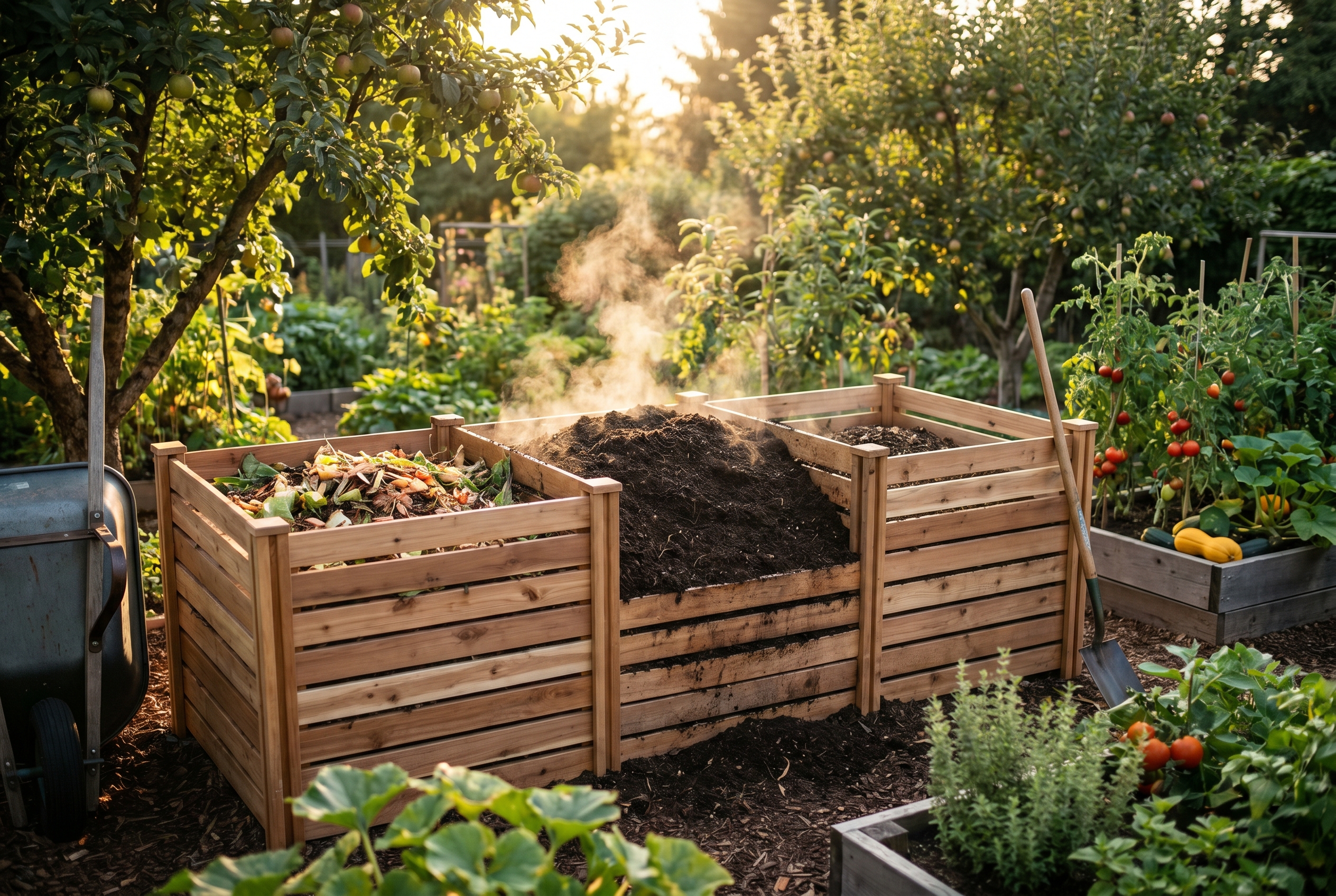
The short version: good compost comes down to one ratio. Layer roughly three parts "browns" (dry, carbon-rich material) to one part "greens" (moist, nitrogen-rich material), keep it as damp as a wrung-out sponge, and turn it every week or two. Do that and you genuinely cannot fail — the pile does the work for you.
If you've been following our seasonal tips for beginners, you already know the refrain: healthy soil is alive, and nothing builds that living soil faster or cheaper than compost you made yourself from scraps you were going to throw away. Let's break the whole thing down so it never feels mysterious again.
Browns vs. greens: the only concept that matters
Every compostable thing is either a brown or a green. It has nothing to do with color — it's about what the material is rich in.
- Browns (carbon): dry leaves, shredded cardboard, paper, straw, sawdust, twigs, paper egg cartons. These are the bulk and the structure of your pile.
- Greens (nitrogen): vegetable and fruit scraps, coffee grounds and filters, fresh grass clippings, plant trimmings, eggshells. These are the fuel.
Browns give the microbes carbon for energy and keep the pile fluffy enough to breathe. Greens give them nitrogen to multiply. Too many greens and the pile goes slimy and smelly; too many browns and it just sits there doing nothing. The 3:1 balance keeps everyone happy.
The foolproof 3:1 method, step by step
You don't need to weigh anything. "Three parts to one part" means by rough volume — three buckets of browns to one bucket of kitchen scraps.
- Start with a base of browns. Put down about four inches of dry leaves or shredded cardboard so air can move up through the pile.
- Add a thin layer of greens. Tip in your kitchen scraps. If you've been collecting them in a countertop tub, this is the moment.
- Cover the greens with more browns. Always bury food scraps under browns — that's the single best trick for keeping pests and smells away.
- Moisten it. Sprinkle with water until a squeezed handful feels damp but doesn't drip.
- Repeat as you go, and turn the whole pile with a fork every one to two weeks to add oxygen.
If you only remember one rule, make it this: every time you add food scraps, throw a few handfuls of browns on top. That habit alone prevents 90% of beginner compost problems.
No yard? No problem. A worm bin on a balcony or under the sink turns the very same scraps into the richest compost there is. Keep the worms happy with shredded-paper bedding and they'll never smell. See our container & balcony guides for a full setup.
What to add — and what to leave out
Add freely: fruit and veg peelings, coffee grounds, tea, crushed eggshells, dry leaves, shredded paper and cardboard, grass clippings, spent plants.
Keep out: meat, fish, dairy, and oily or greasy food (they attract rodents and turn rancid), pet waste, and any diseased plant material. When in doubt, leave it out.
Troubleshooting: reading your pile
It smells like ammonia or rot
Too many greens and not enough air. Fork in a generous helping of dry browns and turn it. It'll sweeten within a week.
Nothing is happening
Usually too dry, too small, or too many browns. Add greens, add water, and make sure the pile is at least three feet wide so it can hold its own heat.
It's a soggy mat
Too wet and compacted. Mix in dry browns to open it up and turn more often.
How do you know when it's done?
Finished compost is dark, crumbly, and smells like a forest floor — earthy and sweet, not sour. You won't recognize the original scraps. With a well-balanced, regularly turned pile, expect this in 8 to 12 weeks. Sift out any big chunks (toss them back in the new pile) and spread a one- to two-inch layer over your beds, then tuck it under a layer of mulch to hold the moisture and keep feeding your soil as it breaks down further.
Frequently asked questions
What is the ideal ratio of browns to greens in compost?
Roughly three parts browns to one part greens by volume. It keeps the pile aerated and odor-free.
Why does my compost smell bad?
Almost always too many greens and not enough air. Add dry browns and turn the pile; it normally clears within a week.
What should you not put in a compost pile?
Meat, fish, dairy, oily food, pet waste, and diseased plants. Stick to plant-based scraps, yard trimmings and paper.
How long does compost take to be ready?
About 8–12 weeks for a turned pile; up to a year for one you never touch.
Can you compost in an apartment without a yard?
Yes — a countertop bin, a worm bin, or a Bokashi bucket all work indoors with no smell when balanced correctly.
Make compost lesson 4 of your path
This guide is the companion to Lesson 4 of the Beginner's Curriculum. Save your progress and earn your First Harvest seal.