The Secret Underground Network in Your Soil
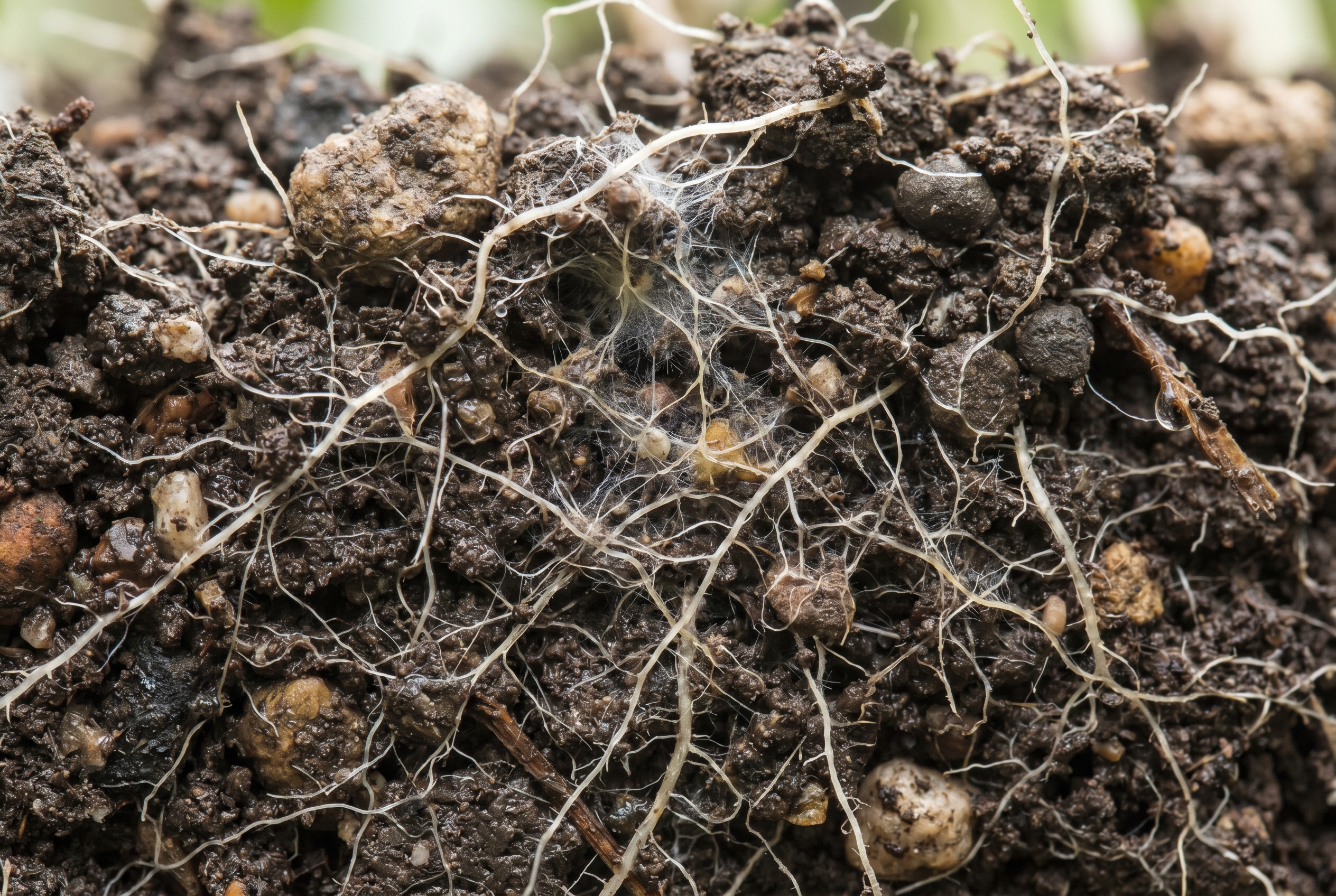
The short version: the soil under your garden is alive. Beneath every healthy bed is a soil food web — bacteria, fungi, protozoa and earthworms — and a web of mycorrhizal fungi that partner with most plant roots, reaching out for water and nutrients in exchange for the plant's sugars. Your plants are quietly fed by this network. The kindest thing you can do is stop disturbing it: dig less, keep the soil covered, and feed it compost.
If you've ever wondered why some gardens seem to grow effortlessly while others struggle no matter how much you fuss, the answer is usually underground. We tend to treat soil as a lifeless thing we pour fertilizer into. It isn't. Once you understand the living network beneath your feet, a lot of "good gardening" advice suddenly makes sense — and gets easier.
Healthy soil is alive
A single handful of good garden soil holds an astonishing amount of life. Most of it is far too small to see, but it's there and it's busy:
- Bacteria: the most numerous residents, breaking down organic matter and holding nutrients in the soil.
- Fungi: fine, thread-like organisms that decompose tougher material and bind soil particles together.
- Protozoa and other tiny grazers: they feed on bacteria and, in doing so, release nutrients in forms roots can use.
- Earthworms: the ones you can see — they pull organic matter down, open up channels for air and water, and leave behind rich castings.
These creatures eat each other and eat dead plant material, and as they live and die they release nutrients right where roots can take them up. This whole interconnected community is what gardeners and scientists call the soil food web. It is the engine of natural fertility — the reason a forest floor grows lush without anyone ever feeding it.
Mycorrhizal fungi: the partnership under the bed
The most remarkable members of that web are the mycorrhizal fungi (say it "my-co-RYE-zal"). The word simply means "fungus-root," and that's exactly what they are: fungi that join up with plant roots and live in partnership with them.
Here's the deal they strike. The fungi send out incredibly fine threads — far finer than the thinnest root — that spread through the soil and explore territory the roots could never reach on their own. They gather water and nutrients, especially phosphorus, which is notoriously hard for plants to find, and deliver them back to the root. In return, the plant shares some of the sugars it makes through photosynthesis to feed the fungi.
It's a true mutual exchange — both sides come out ahead. Most garden plants form these partnerships naturally, given the chance. (A few families, such as the cabbage and beet relatives, mostly don't, which is perfectly normal.) The point isn't to memorize exceptions; it's to realize that for most of what you grow, there is a living support system reaching out on your plants' behalf.
Think of the roots as the plant's hands and the fungal threads as a vast extended reach — gathering from far more soil than any root could touch alone.
Why this network matters to you
Two big things come out of a thriving soil food web, and both make your gardening life easier.
It feeds your plants. Instead of relying on you to deliver a perfect nutrient dose, plants in living soil draw on a steady, slow supply released by the network as a whole. Well-fed soil life means well-fed plants — often more resilient ones, too.
It builds soil structure. Fungal threads and the sticky substances soil microbes produce glue tiny particles into crumbs. Those crumbs create the open, airy structure that lets roots breathe, water soak in, and the soil hold moisture through a dry spell. That lovely dark, crumbly tilth gardeners prize is largely the work of soil life, not something you can buy in a bag.
The everyday habits that damage it
The hard part is that some of the most common gardening habits quietly work against this network. None of them make you a bad gardener — most of us were taught to do them. But it helps to know what they cost.
- Frequent deep tilling. Turning the soil over and over physically tears apart the fungal threads and collapses the structure soil life has built. Each deep dig sets the network back.
- Leaving soil bare. Exposed soil bakes in the sun, dries out, and washes away in rain. Soil life needs cover to stay cool, moist and alive.
- Synthetic quick-release fertilizers and fungicides. Fast-acting feeds hand the plant a shortcut, so it has less reason to "trade" with its fungal partners, and the partnership can fade. Fungicides, by their nature, can harm the very fungi you want to keep.
Stop apologizing to your spade. You don't have to garden perfectly to help the soil — you mostly just have to leave it alone a little more. Dig only where you're actually planting, tuck a blanket of mulch over the rest, and let the underground workers get on with it. Doing less is the upgrade here.
The habits that protect it
The good news is that protecting the network is simpler — and lazier — than fighting it. Three habits do most of the work.
- Minimize digging (no-dig / no-till). Leave the structure intact. Loosen the soil only where you must, like a single planting hole, rather than turning over whole beds each season.
- Keep the soil covered. Spread mulch or grow a cover crop so the surface is never bare. Cover keeps soil cool, moist and protected, and it slowly breaks down to feed the life below.
- Feed the soil, not just the plant. Top-dress with compost or other organic matter and let the network distribute it. You're stocking the pantry for the whole food web rather than spoon-feeding one plant.
If you've read our guide to composting kitchen waste, you already have the single best free input for this. And if you're not sure what your soil is starting with, a quick soil test tells you where you stand before you change anything.
How to protect the life in your soil
Here's the whole approach as a simple sequence you can follow this season — no special equipment, no chemistry.
- Stop tilling unnecessarily. Resist the urge to dig the whole bed over. Disturb the soil only where you're planting.
- Keep soil covered with mulch or cover crops. Never leave bare earth exposed to sun and rain.
- Feed it compost and organic matter. Lay an inch or two of compost on top once or twice a year and let it work down.
- Skip synthetic quick-release fertilizers. Choose slow, organic inputs that work with soil life instead of around it; avoid routine fungicides.
- Water deeply but avoid waterlogging. Water thoroughly and less often so deeper roots benefit, but don't let the soil stay soggy — the network needs oxygen too.
- Be patient. Soil life recovers on its own timetable. Keep these habits up for a season or two and you'll feel the difference in your hands.
Frequently asked questions
What is the soil food web?
It's the community of living things in healthy soil — bacteria, fungi, protozoa, earthworms and more — that feed on each other and on organic matter. As they live and die, they release nutrients in forms roots can take up. Healthy soil isn't dirt; it's alive, and that life is what feeds your plants.
What are mycorrhizal fungi?
They're fungi that partner with the roots of most garden plants. Their fine threads reach far beyond the roots to gather water and nutrients — especially phosphorus — and pass them to the plant, while the plant feeds the fungi sugars in return. It's a genuine mutual exchange that benefits both.
Does tilling really harm soil?
Frequent deep tilling breaks apart fungal threads and the structure soil life builds, and it leaves the surface bare. The occasional loosening to plant is fine, but turning soil over and over works against the network. Many gardeners get looser, healthier soil by digging less, not more.
Should I buy a mycorrhizae inoculant?
Usually not. Many native mycorrhizal fungi are already in your soil and recover well when you build it with compost and minimal disturbance. An inoculant can help in very poor or brand-new soils, but for most beginners the cheaper, more reliable path is to feed and protect the life you already have.
How do I make my soil healthier?
Dig as little as possible, keep the soil covered with mulch or cover crops, and feed it regularly with compost. Skip synthetic quick-release fertilizers that bypass the network. Do these few things consistently and the soil food web rebuilds itself, giving you darker, looser, more fertile ground.
Take this underground into the curriculum
This guide pairs with the soil and compost lessons in the Beginner's Curriculum. Follow the path to put the soil food web to work bed by bed.