Mulching Magic: Save Water & Protect Your Soil
The short version: mulch is simply a layer of material laid over bare soil, and a 2-3 inch blanket of organic mulch conserves water, smothers weeds, steadies soil temperature, and feeds your soil as it breaks down. Spread it evenly over weeded, watered ground, and keep it a couple of inches clear of every plant stem and tree trunk so nothing rots. That's the whole trick.
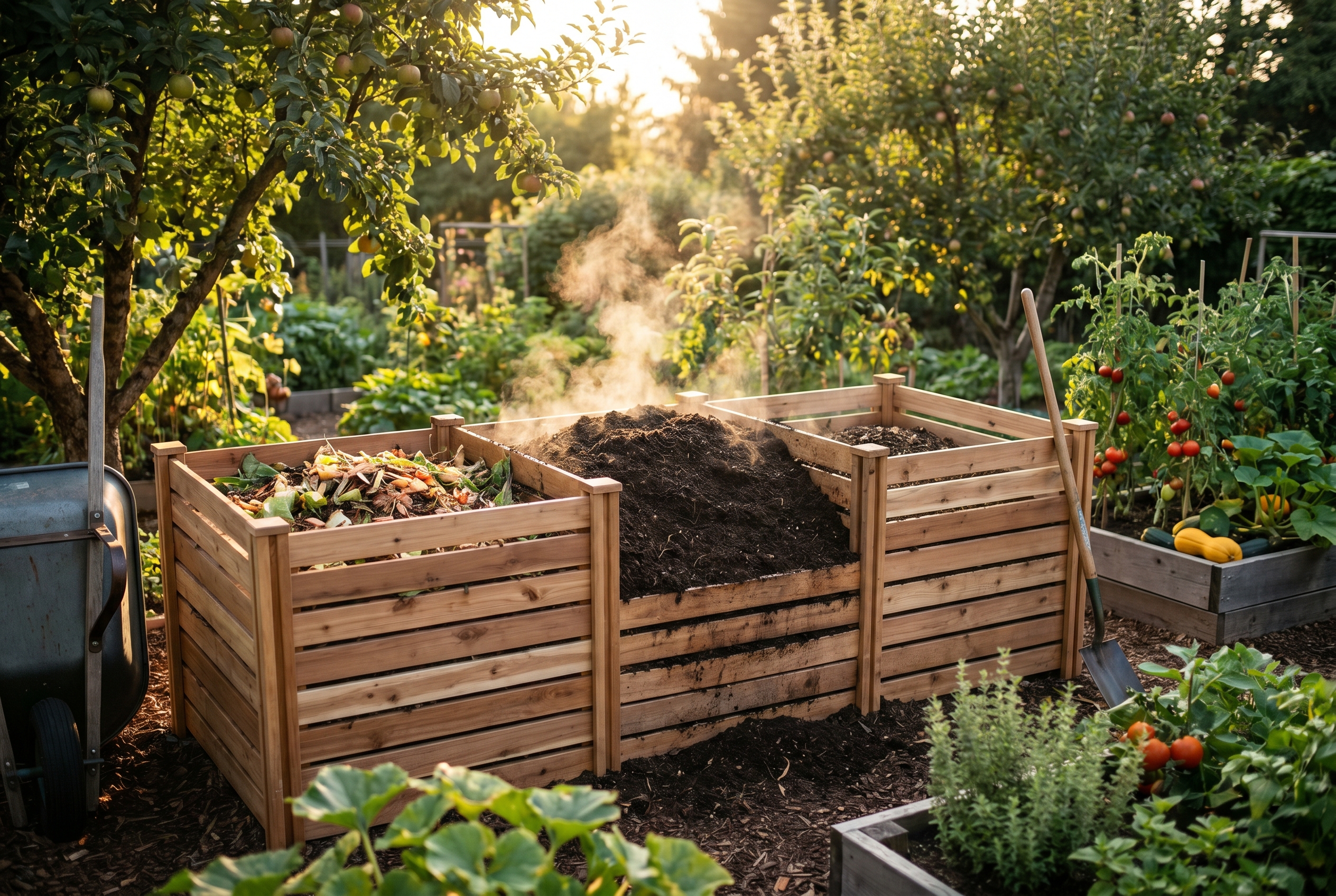
If you've been building your soil with the compost you made from scraps, mulching is how you protect that work. Bare soil dries out, bakes hard, grows weeds, and washes away in heavy rain. A simple cover of organic material fixes all of that at once — and it costs next to nothing. Let's make it feel easy.
What mulch is, and why 2-3 inches is the magic number
Mulch is any material you spread over the surface of the soil. Organic mulches — the only kind we use here — are made from once-living material like straw, leaves, or wood chips, and they slowly rot down to feed the soil beneath. As they do their daily job they keep the sun off the ground (so water doesn't evaporate), block light from weed seeds (so they can't sprout), and act like a duvet that keeps the soil cool in summer and warmer in winter.
Depth is what makes it work. Two to three inches is deep enough to lock in moisture and starve weed seeds of light, but still shallow enough to let rain soak through and air reach the soil. Thinner than that and weeds shoulder their way up; much thicker and you risk smothering roots and shedding rain right off the top before it ever reaches the soil.
The common organic mulches — and where each one fits
You don't need anything fancy. The best mulch is usually whatever you can get cheaply and locally.
- Straw: light, cheap, and tidy — the classic choice for vegetable beds and around strawberries. Use clean straw, not hay (more on that below).
- Shredded leaves: free in autumn and gold for the soil. Shred them with the mower first so they don't mat down. Wonderful on vegetable beds and around perennials.
- Wood chips: long-lasting and handsome. Best for paths, and around trees, shrubs and other permanent plantings rather than in among annual vegetables.
- Grass clippings: nitrogen-rich and free, but only in thin layers. Pile them thick and they mat into a slimy, smelly mass.
- Compost: the all-rounder. A thin layer doubles as a mulch and a gentle feed, and it's perfect for spreading around hungry vegetables.
The one rule that prevents rot: keep mulch off the stems
If you remember nothing else, remember this. Mulch holds moisture — that's the point — but moisture held right against a plant's stem or a tree's trunk invites rot, disease, and bark-chewing pests. So as you spread, always pull the mulch back about two inches from every stem and trunk, leaving a little breathing collar of bare soil around each plant. You'll see piles of mulch heaped up against tree trunks everywhere; it's one of the most common mistakes there is, and it slowly kills the tree.
Spread mulch like a doughnut, never a volcano. A flat, even layer with a clear ring around each stem — not a cone mounded up against the trunk.
How to mulch a garden bed
Start to finish, it's a fifteen-minute job for a small bed.
- Weed and water first. Pull any existing weeds and water the soil well — mulch locks in whatever moisture is already there, so you want the ground damp before you cover it.
- Choose your mulch. Straw or shredded leaves for vegetables; wood chips for paths and around shrubs and trees.
- Spread 2-3 inches evenly. Lay it in an even blanket across the bare soil. Don't compact it — just rake it level.
- Keep it 2 inches off stems and trunks. Sweep the mulch back from each plant so it isn't touching the stem, leaving that breathing collar.
- Top up as it breaks down. Organic mulch slowly rots into the soil — that's a feature, not a fault. Refresh it once or twice a year to keep the layer at two to three inches.
Free leaves are the beginner's secret. Every autumn, run the mower over fallen leaves and stockpile the shreds. They make one of the best mulches there is — and the surplus rots down into gorgeous leaf mould you can fold back into your beds next year, just like your homemade compost.
Mulching for winter protection
Mulch isn't only a summer water-saver. In cold months a thick layer becomes insulation, protecting roots from hard freezes and — just as importantly — from the freeze-thaw cycles that heave plants up out of the ground and snap their roots. Spread three to four inches of straw or shredded leaves over the soil once it has cooled in late autumn.
It's especially valuable for overwintering crops like garlic, which sits in the ground all winter. A blanket of straw keeps the soil temperature steady, shields the cloves through the cold, and suppresses the weeds that would otherwise compete with them come spring. In the spring, gently pull the winter mulch back to let the soil warm and the shoots come through.
What not to do
A few easy mistakes undo all the good:
- Don't pile mulch against stems and trunks. The volcano habit traps moisture and rots the plant. Doughnut, not volcano.
- Don't use thick mats of grass clippings. A thick green layer mats down into a slimy, airless crust that water runs off. Spread clippings thin, or let them dry first.
- Don't use hay instead of straw. Hay is cut grass and seed heads — it's packed with weed and grass seed that will sprout straight into your bed. Straw is the leftover stalks after grain is harvested, and is far cleaner.
- Don't overdo the depth. More is not better. Past three inches you start smothering roots and blocking rain.
Get those few things right and mulch quietly does the rest — less watering, fewer weeds, and steadily richer soil. Pair it with smart watering and you'll barely touch the hose; see our companion guide on watering without guesswork.
Frequently asked questions
How thick should mulch be?
Two to three inches is the sweet spot. That's deep enough to hold moisture and block weed seeds, but shallow enough to let rain and air reach the soil. Thinner and weeds push through; thicker and you can smother roots.
What is the best mulch for a vegetable garden?
Straw and shredded leaves are ideal — light, quick to break down, and feeding the soil within a season. Use clean straw, not seed-filled hay. A thin layer of compost works wonderfully too.
Does mulch steal nitrogen from soil?
Only in the thin contact layer where high-carbon wood chips meet the soil surface, and only briefly. Because the effect stays right at the surface, your plant roots below are unaffected. Just keep wood chips on top as a mulch and never till them into the soil.
Should I mulch in winter?
Yes — a few inches of straw or leaves insulates roots against hard freezes and the freeze-thaw heaving that lifts plants out of the ground. It's especially good over overwintering crops like garlic.
Can mulch cause slugs or rot?
It can if it's too thick or piled against plants. Keep the layer to two or three inches and pull it back a couple of inches from every stem and trunk, and you'll avoid both the slug hideouts and the rot.
This is Lesson 5 of your path
Mulching is Lesson 5 of the Beginner's Curriculum. Save your progress and earn your First Harvest seal as you go.