Natural Solutions for Garden Pests
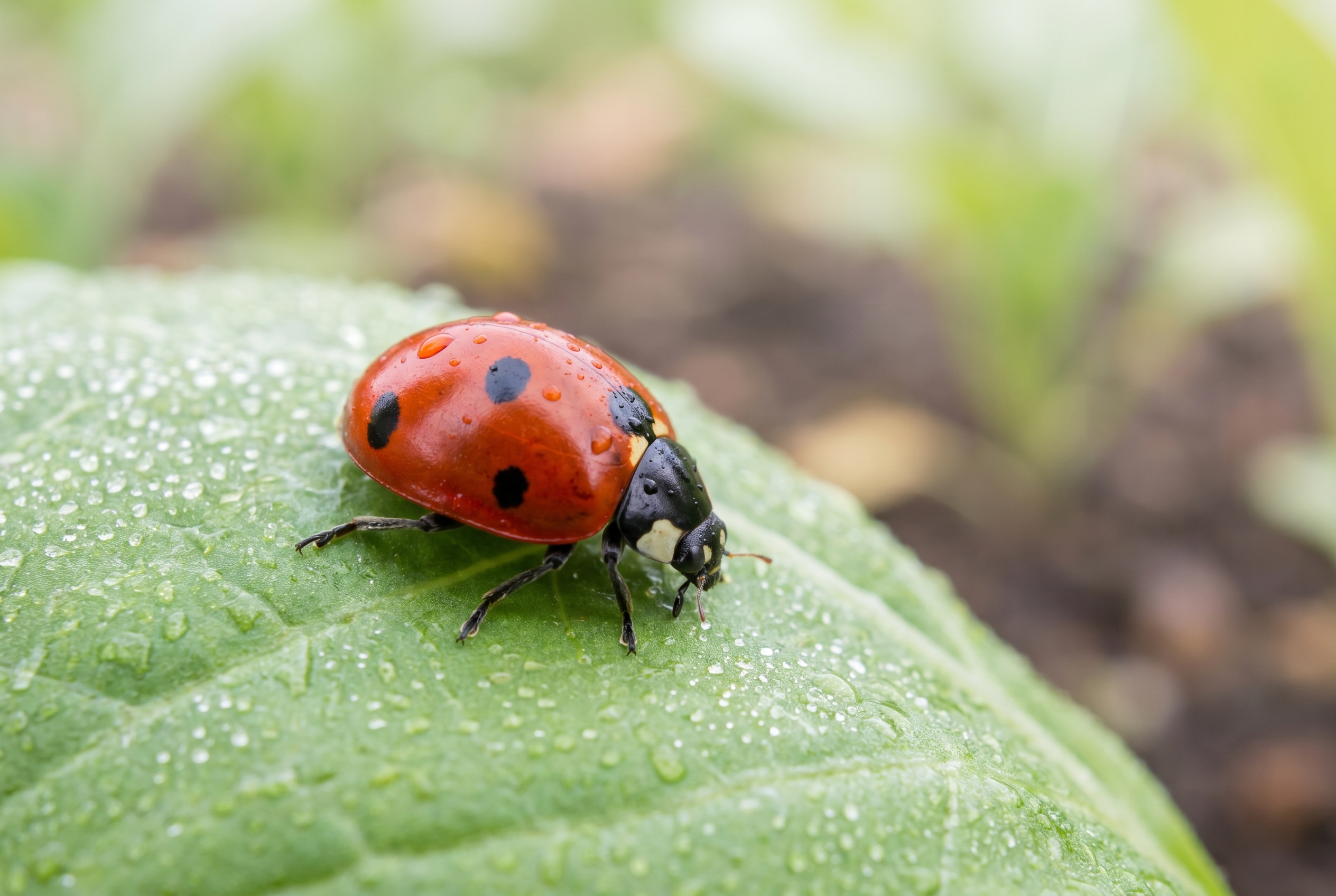
The short version: the best organic pest control isn't a spray at all — it's a healthy, balanced garden that defends itself. Feed the soil, mix up your planting, and grow flowers that bring in helpful insects like ladybugs and lacewings to eat the pests for you. When something does flare up, reach for physical methods first — handpicking, barriers, and a blast of plain water — and keep gentle organic sprays as a rare last resort.
Here's the mindset shift that changes everything for a beginner: a few pests are normal. A garden with zero insects is a garden with no food web — and no helpers. The goal isn't to wipe everything out. It's balance, where the good bugs keep the troublesome ones in check while you barely lift a finger.
The organic philosophy: aim for balance, not eradication
Reach for a spray the moment you see a bug and you start a treadmill you can't get off. Broad-spectrum sprays kill the pest and the predators that were about to eat it — and the predators are always slower to come back. So the pests rebound first, with nothing left to stop them, and you spray again.
Organic gardening steps off that treadmill. You tolerate a little damage, you let nature's controls catch up, and you save any intervention for the rare problem that's genuinely getting out of hand. A few holes in a cabbage leaf are not an emergency. They're the sign of a living garden.
Build a garden that defends itself
Almost all of organic pest control happens before you ever see a pest. A strong, varied garden simply shrugs off problems that flatten a stressed one.
- Healthy soil first. Plants grown in living, compost-rich soil are more vigorous and far better at fending off pests and disease. This is why we start every beginner on the soil — see our guide to the soil food web.
- Diverse planting. A long row of a single crop is a buffet with a neon sign. Mixing crops, herbs and flowers together makes it harder for pests to find their target and spread.
- Flowers for the helpers. Tuck flowering plants among your vegetables. They feed the adult beneficial insects whose offspring do the pest-eating, turning your beds into a year-round habitat for your own pest-control crew.
Meet the beneficial allies
These are the insects you want. Learn to recognise them so you never squash a friend by mistake.
- Ladybugs (ladybirds). Both the familiar spotted adults and their alligator-shaped larvae are voracious aphid eaters.
- Lacewings. Their larvae — nicknamed "aphid lions" — hoover up aphids, mites and small caterpillars.
- Hoverflies. The adults look like little bee mimics hovering over flowers; their larvae quietly devour aphids by the dozen.
- Ground beetles. Night-shift hunters that patrol the soil surface for slugs, caterpillars and their eggs.
- Predatory and parasitic wasps. Mostly tiny and harmless to you, these keep aphids and caterpillars in check, often by laying eggs in the pests themselves.
You invite all of them the same simple way: grow flowers and stop spraying. Small, open flowers are easiest for them to feed on — alyssum, dill, fennel, yarrow, calendula and the umbrella-shaped blooms of the carrot family are reliable favourites. And because broad-spectrum sprays kill these allies along with the pests, the single most powerful thing you can do is simply put the bottle down.
Don't rush to "rescue" a plant covered in aphids. That cluster is a feeding station that lures in ladybugs and lacewings. Give it a few days and you'll often watch the predators arrive and clear it for free. Spray it and you scare off the very help you were hoping for.
Physical methods first
When a pest does need a response, hands and water beat chemicals nearly every time. These methods are cheap, instant, and completely harmless to your beneficial insects.
- Handpick. Caterpillars, slugs and beetles can be picked off and dropped into soapy water. Five minutes on a quiet evening is remarkably effective.
- Blast aphids with water. A strong jet from the hose knocks aphids clean off; most soft-bodied insects can't climb back up. Repeat every couple of days.
- Cover vulnerable crops. Floating row cover (a light fabric laid over plants) or fine netting physically blocks moths, beetles and birds — just remove it when crops need pollinating.
- Barrier the slugs. A ring of copper tape, crushed eggshells or sharp grit around seedlings, plus clearing damp hiding spots, keeps slugs off your tenderest plants.
Identifying common beginner pests
Aphids
Tiny green, black or grey insects clustered on new shoots and leaf undersides, often with sticky "honeydew" and curled leaves. Water sprays and patient ladybugs handle them; only a heavy, persistent colony needs more.
Slugs and snails
Ragged holes in leaves and silvery slime trails, worst in damp weather and overnight. They're the classic seedling-killer — handpick after dark, set barriers, and welcome the ground beetles and birds that eat them.
Cabbage caterpillars
Green or velvety caterpillars chewing big holes in brassicas (cabbage, kale, broccoli), hatched from eggs laid by white butterflies. Net the crop early to stop the butterflies landing, and pick off any caterpillars you find on the leaf undersides.
Gentle organic last resorts — used sparingly
Sometimes, despite everything, an infestation gets ahead of you. There are two organic sprays worth knowing — but please treat them as a genuine last step, not a first reflex.
- Insecticidal soap. A specially formulated soap spray that works on contact against soft-bodied pests like aphids. It only kills what it actually touches, so spray the pests directly.
- Neem oil. A plant-derived oil that disrupts feeding and growth in many pests. An accepted organic option, used per the label.
The crucial caution: even organic sprays can harm beneficial insects. They don't read labels — a soap or neem spray will kill a ladybug or a foraging bee just as readily as an aphid if it lands on them. So if you must spray, make it targeted: treat only the affected plant, never the whole garden, and apply in the evening when pollinators have gone quiet. And to be completely clear, organic means organic here — we never recommend synthetic pesticides.
Master this order — healthy garden, then helpers, then hands, then (rarely) a targeted spray — and pest "problems" mostly stop feeling like problems at all. To put it into a full season's plan, start with the Beginner's Curriculum.
Frequently asked questions
What is the best natural pest control for a vegetable garden?
A healthy, diverse garden that defends itself. Feed the soil, mix your crops, and grow flowers that attract beneficial insects to eat pests for you. When something flares up, use physical methods first — handpicking, barriers, row covers, and a strong spray of plain water for aphids.
How do I get rid of aphids organically?
Blast them off with a strong jet of plain water, repeating every couple of days. Leave part of the colony if you can, since it draws in ladybugs and lacewings. Only spot-treat with insecticidal soap if an infestation is truly severe.
Which insects are good for my garden?
Ladybugs and lacewings eat aphids, hoverfly larvae do too, ground beetles hunt slugs and caterpillars, and tiny predatory wasps keep many pests in check. Invite them with flowers like alyssum, dill and yarrow, and by avoiding broad-spectrum sprays.
How do I stop slugs without chemicals?
Handpick after dark or rain when they feed, and set barriers like copper tape or crushed eggshells around seedlings. Remove damp hiding spots, and encourage the ground beetles and birds that eat them. A sunken dish of beer also traps them.
Is neem oil safe for organic gardens?
It's an accepted organic option but not harmless — it can harm bees and beneficial insects if sprayed on them directly. Use it only as a last resort, on the affected plant, in the evening, and follow the label rather than blanketing the garden.
This is Lesson 7 of your path
Natural pest control is Lesson 7 of the Beginner's Curriculum. Save your progress and earn your First Harvest seal.