Growing Garlic in Containers, Balconies & Buckets
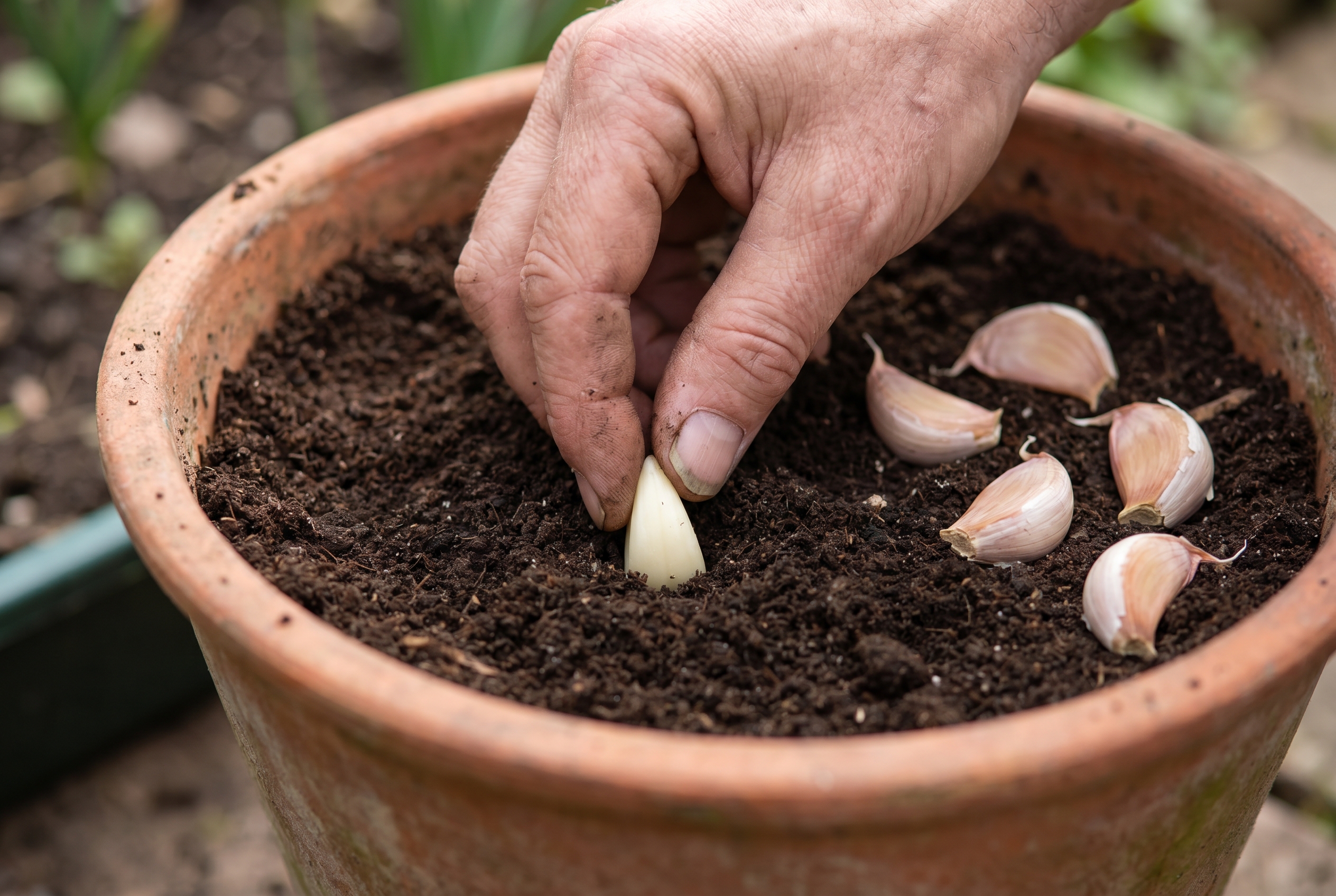
The short version: garlic is one of the easiest crops to grow with no yard at all. Fill a pot or bucket at least 8 inches deep with rich, free-draining mix, break a head into cloves, and plant each one pointy end up about 2 inches deep and 6 inches apart in autumn. Water, mulch, keep it sunny, and you'll lift fat homegrown bulbs the following summer.
Garlic asks for almost nothing and gives back a great deal. It shrugs off most pests, it doesn't mind a balcony, and a single supermarket-sized head turns into a whole pot of new heads. If you've never grown a thing before, this is a wonderful place to start. Let's walk through it from clove to harvest.
Hardneck or softneck: which garlic should you grow?
Garlic comes in two broad families, and the right one depends mostly on your climate.
- Hardneck garlic is the hardier of the two and the better bet in cold-winter areas. It sends up a curling flower stalk called a scape in early summer (more on those below), and it tends to have bigger, easy-to-peel cloves. It doesn't store as long, though.
- Softneck garlic suits milder areas, stores for many months, and is the type you can braid. It usually gives more, smaller cloves per head and doesn't produce scapes.
If you're not sure of your winters, our guide to zones & frost dates will tell you which camp you fall into. When in doubt in a cold place, choose hardneck.
When to plant garlic
Timing is the one thing worth getting right. In most regions you plant garlic in autumn, a few weeks before the ground freezes. The cloves quietly grow roots through the cold, sit tight over winter, and then surge into leaf in spring — ready to harvest the following summer. That long, patient season is exactly what makes the bulbs big.
In mild-winter areas you can also plant in late winter or early spring. It works, but spring-planted garlic has less time to bulk up, so the heads come out smaller. Autumn is the gold standard.
The right container and mix
Garlic isn't fussy, but it has two firm requirements: room to root and somewhere for water to escape.
- Depth: at least 8 inches deep. A standard bucket, a window box, or any roomy pot all work beautifully.
- Drainage: drill or punch holes in the bottom if there aren't any. Garlic sitting in waterlogged soil will rot.
- Soil: a rich but free-draining potting mix. Stir in some compost for fertility, and if your mix feels heavy, add a handful of grit so it drains freely.
How to plant your cloves
This is the satisfying part. You plant the individual cloves, and each one becomes a whole new head.
- Break the head into cloves. Gently snap a head of seed garlic apart and choose the biggest, healthiest cloves — they make the biggest bulbs. Leave the papery skin on.
- Plant pointy end up. The flat end is where the roots come from, so the pointy tip goes skyward. Push each clove about 2 inches deep.
- Space them out. Set cloves roughly 6 inches apart so each has room to swell into a full head.
- Water it in. Give the container a good drink so the soil settles around the cloves.
- Mulch the top. A layer of straw or compost insulates the cloves through winter and keeps moisture even; see our mulching guide for the right depth.
The single most common beginner mistake is planting a clove upside down. Pointy end up, flat root-end down — say it out loud as you plant and you'll never get it wrong.
One head, a whole pot. A single head of garlic might hold eight to twelve plantable cloves — so one head you bought to cook with can fill an entire bucket. Plant the fat outer cloves and save the tiny inner ones for the kitchen.
Caring for garlic through the seasons
Once it's planted, garlic mostly looks after itself. Give it these few things and it'll thrive:
- Sun: a spot with as much direct sun as your balcony or patio can offer — full sun is best.
- Even moisture: keep the soil damp but never soggy. Pots dry out faster than the ground, so check often in spring as growth speeds up. Ease off watering as harvest nears.
- A gentle feed: garlic in a container appreciates an organic liquid feed every few weeks through spring while it's making leaves.
- Snap off the scapes: if you're growing hardneck garlic, cut or snap off the curling flower stalks when they appear so the plant pours its energy into the bulb instead.
Harvesting and curing
Your patience pays off the following summer. The signal to harvest is in the leaves: when the lower leaves turn brown but several upper ones are still green, the bulbs are ready. Don't wait for every leaf to die back, or the heads can split.
Loosen the soil and lift the bulbs gently rather than yanking them. Then comes curing — drying the bulbs in a warm, airy, shaded spot for about two weeks so the skins set and the flavor deepens. Once the necks are dry and papery, brush off the loose soil, trim the roots, and store your garlic somewhere cool and dry. Set aside a few of the best heads to plant again in autumn.
Frequently asked questions
When should I plant garlic?
In most areas, plant in autumn a few weeks before the ground freezes, for a harvest the following summer. The cloves root before winter and then take off in spring. In mild regions you can plant in late winter or early spring, but the bulbs tend to be smaller.
How deep should a container be for garlic?
At least 8 inches deep, with drainage holes so the cloves never sit in soggy soil. A roomy pot, window box or clean bucket all work. Give yourself enough width to space cloves about 6 inches apart.
Can I plant garlic from the grocery store?
You can try, but it's unreliable. Supermarket garlic may be a variety that isn't suited to your climate, and some of it is treated to resist sprouting. Seed garlic sold for planting is the more dependable choice and is usually certified disease-free.
How long does garlic take to grow?
Autumn-planted garlic stays in the ground for roughly eight to nine months and is harvested the next summer. Spring-planted garlic has a shorter season and gives smaller bulbs. It's a slow, patient crop rather than a quick one.
What are garlic scapes?
Scapes are the curling flower stalks hardneck garlic sends up in early summer. Snapping them off directs the plant's energy back into the bulb for a bigger harvest. They're tender and mildly garlicky, so you can cook with them too.
Make garlic part of your year-round plan
Garlic is a brilliant first crop because it spans the seasons. Follow the Beginner's Curriculum to learn your frost dates and how to keep something growing all year, and track every clove with the Tended app.