Estimated reading time: 10 minutes
Hey gardening friends, James here! After sharing my guide about fall mulching, I’ve had lots of questions about what actually happens under all that organic matter. Today we’re diving into something that absolutely blew my mind when I first learned about it – and trust me, it’s going to change how you think about your garden forever. We’re talking about the incredible underground network of mycorrhizal fungi that lets your plants… wait for it… talk to each other!
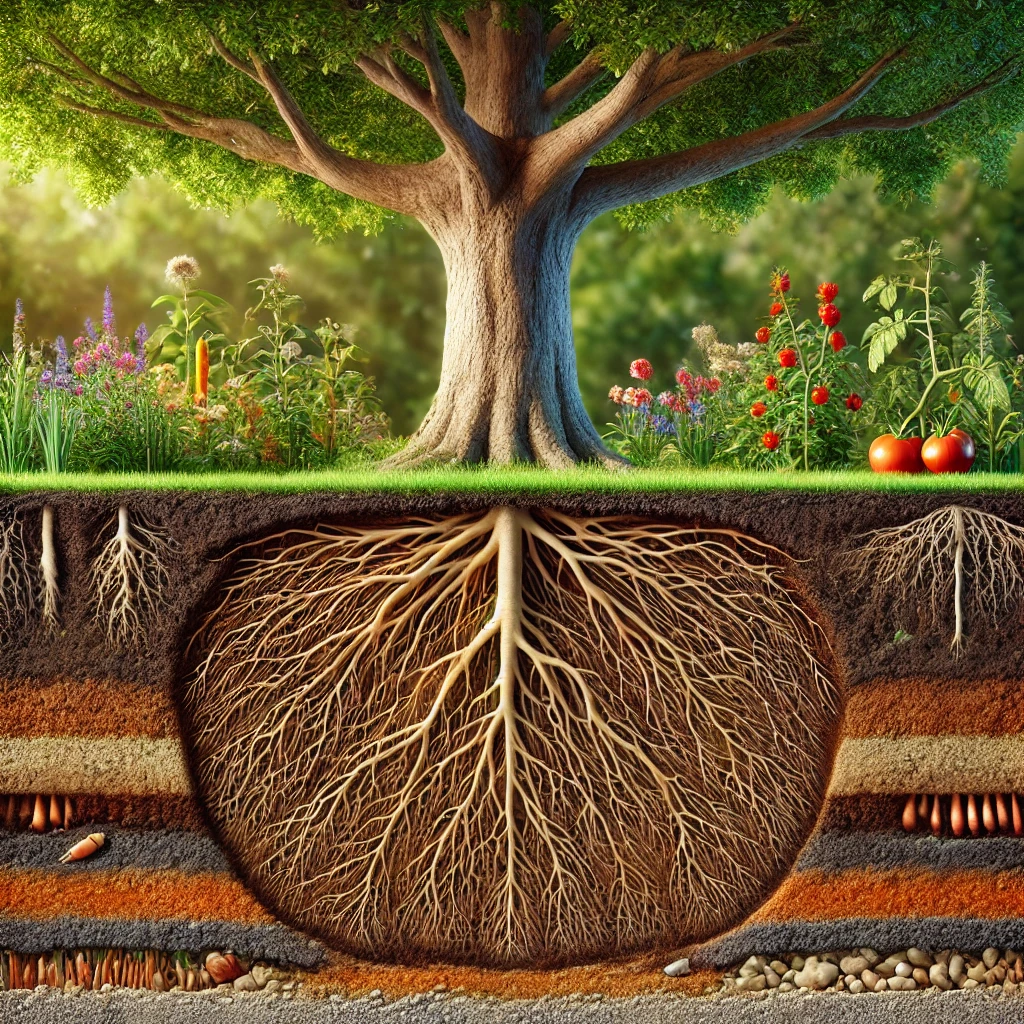
Nature’s Internet: What’s Really Happening Underground
I can’t tell you how many times I’ve been working in my garden and thought, “Man, these plants are doing way better than they should be.” Turns out, there’s a secret reason for that! Below our feet, there’s this amazing network of fungal threads that connect plants like some kind of natural internet. Pretty cool, right?
If you’ve been following my fall gardening tips for beginners, you might have noticed I emphasize protecting soil life. Here’s why these fungi are so crucial – they’re actually working with your plants in a mutually beneficial relationship:
- Plants feed the fungi sugars they make during photosynthesis
- Fungi hook plants up with water and nutrients from the soil
- The fungi create highways that let plants share resources and information
How I Discovered Plants Were “Talking” Behind My Back
Last year, while working on my fall mulching guide, I noticed something fascinating. As I was preparing the garden for winter and thinking about the growing season behind us, I saw that my established tomato plants had thrived all season, but what really caught my attention was how the younger plants nearby were also doing surprisingly well. At first, I thought I’d just gotten better at gardening (ha!), but then I learned about mycorrhizal networks.
The Plant Group Chat: Nature’s Social Network
Imagine your plants are all in one big group chat, but instead of sending emojis and memes, they’re sharing vital information and resources through these fungal networks. I know it sounds wild, but stay with me here! Just like we use the internet to share information and help each other out, plants have been using their own underground network for millions of years.
Through these fungal connections, your garden’s communication system is buzzing with activity 24/7. When I first learned about this, it completely changed how I looked at my garden beds. That tomato plant isn’t just a single plant – it’s part of a complex community, constantly sending and receiving messages and resources.
Here’s what’s happening in your garden’s group chat:
- The Defense Alert System When a plant gets attacked by pests, it doesn’t just sit there taking it. Instead, it sends out chemical warning signals through the fungal network – kind of like posting a neighborhood watch alert. I’ve seen this in action with my tomatoes: when hornworms start munching on one plant, nearby plants actually start producing defensive compounds before they get attacked. It’s like they’re getting a heads-up to beef up security!
- The Resource Sharing Economy Think of it as nature’s version of a community food bank. When one plant is struggling (maybe it’s in shade or low on nutrients), others can actually share their resources through the network. I’ve noticed this particularly with my established garden beds – younger plants planted near healthy, mature ones often grow much better than those planted in isolation.
- The Parent-Child Support System This one really blows my mind – mother trees can recognize and preferentially support their own seedlings! They’ll send extra nutrients and sugars to their offspring through the fungal network, giving them a better chance of survival. It’s like they’re packing their kids a healthy lunch every day.
- The Disease Warning System Just like we might warn our friends about a flu going around, plants use these networks to share information about diseases. When one plant gets infected, it can signal others to activate their immune responses early. I’ve watched this play out in my garden where fungal diseases seem to spread more slowly in areas with well-established soil networks.
- Seasonal Preparations Plants even use these networks to help each other prepare for seasonal changes. As fall approaches, trees can share resources with smaller plants, helping them prepare for winter. This is one reason why forest understory plants often do better than isolated garden plants – they’re plugged into this amazing support network.
The coolest part? This network is so sophisticated that plants can actually direct resources to specific neighbors and even restrict access to plants that don’t “play nice” (like certain invasive species). It’s less like a simple group text and more like a highly advanced social network with privacy settings and all!
Making This Work in Your Garden
1. The Truth About Tillage
Here’s something I learned the hard way – and it completely changed my approach to gardening. While I’m a huge advocate for no-till gardening now, let’s be real: sometimes you need that initial tillage to establish new beds, especially if you’re dealing with compacted soil or converting a lawn to a garden bed. If you’re starting seeds for the first time, you’ll want to get this soil preparation right from the start.
Here’s my practical approach to tillage:
- First time? Go ahead and till to establish your beds
- Break up that compacted soil
- Add organic matter and necessary amendments (check out my DIY compost starter guide for perfect soil amendments)
- Level everything out
But here’s the key – once those beds are established, switch to no-till practices. Think of it like this: you wouldn’t renovate your house’s foundation every year, right? Same goes for your soil structure. After that initial setup:
- Use mulch to feed soil life
- Practice no-dig gardening for maintaining beds
- Keep soil covered with mulch or living plants
- Add compost by laying it on top, letting nature’s workers pull it down
2. Plant Communities: Creating Nature’s Perfect Party
In my garden, I’ve found that certain plant combinations just work better together. It’s like setting up the perfect party where everyone gets along. If you’ve tried growing fresh herbs, you might have noticed how some companions seem to help each other thrive.
What’s a Guild, Anyway?
Think of a guild as nature’s perfect friend group. In the wild, you never see plants growing in neat little rows of the same species (that’s a human thing!). Instead, you find communities where each plant plays a specific role. When planning your fall tree planting, consider creating these guilds around your new trees.
Why Guilds Work
Each plant in a guild has a specific job:
- The Tall Support Friends
- Trees or tall plants that provide shade
- Support for climbing plants
- Wind protection for smaller plants
- Deep roots that mine nutrients from way down
- The Middle Layer Crowd
- Shrubs and medium-height plants
- Nitrogen fixers like peas or beans
- Aromatic plants that confuse pests
- Plants with different root depths
- The Ground Cover Crew
- Low-growing plants that protect soil
- Living mulches that suppress weeds
- Shallow-rooted plants that hold moisture
- Spreaders that fill in gaps
- The Underground Party
- Plants with different root structures
- Some deep, some shallow
- Some fibrous, some tap-rooted
- Each accessing different soil layers
Here’s a real example from my garden:
- Tall layer: Apple tree
- Middle layer: Comfrey (nutrient accumulator), bush beans (nitrogen fixer)
- Ground level: Strawberries, thyme
- Underground buddies: Daffodils (bulbs for different root zone)
- Climbers: Runner beans (using the apple tree for support)
My Favorite Guild Combinations
- The Three Sisters (with a twist):
- Corn (the tall support)
- Pole beans (the climber and nitrogen fixer)
- Squash (the ground cover)
- I add some marigolds and nasturtiums for pest control
- The Herb Garden Guild:
- Rosemary (tall and protective)
- Oregano and thyme (middle spreaders)
- Creeping thyme (ground cover)
- All sharing similar water needs and creating beneficial insect habitat
- The Perennial Food Forest Guild:
- Fruit tree
- Comfrey (nutrient accumulator)
- Herbs (pest confusers)
- Strawberries (ground cover)
- Spring bulbs (different root zone)
Learning from the Soil Scientists
There’s this amazing book that opened my eyes to all this – “Teaming with Microbes” by Jeff Lowenfels and Wayne Lewis. If you’re even slightly curious about what’s happening in your soil, grab a copy. It completely transformed how I think about gardening. The authors explain the soil food web in a way that finally made everything click for me.
But here’s where it gets even better. Have you heard of Dr. Elaine Ingham? She’s basically the rock star of soil biology! Her work completely revolutionized how we understand the soil food web. I first discovered her through her fascinating lectures and soil courses, and let me tell you – mind blown!
Dr. Ingham’s Soil Food Web Approach
Dr. Ingham showed us something amazing: healthy soil isn’t just dirt – it’s a living ecosystem teeming with beneficial organisms. Here’s what she taught me:
- The Power of Compost Tea
- Not all compost tea is created equal (I learned this the hard way!)
- The right brewing method matters hugely
- Different plants benefit from different microbial communities
- You can actually see these microorganisms under a microscope
- Understanding Soil Life Dr. Ingham explains how a healthy soil food web should have:
- Beneficial bacteria
- Productive fungi
- Protozoa
- Nematodes
- Microarthropods
- The pH Myth One of the most eye-opening things I learned from Dr. Ingham is that when you have a healthy soil food web:
- Plants can generally access nutrients regardless of pH
- The microorganisms help make nutrients available
- You don’t need to stress as much about perfect pH numbers
Quick Soil Building Tips I Learned from Dr. Ingham:
- Start with Quality Compost
- Look for compost that smells earthy, not sour (I share how to get this right in my compost starter guide)
- Should be dark and crumbly
- Avoid compost that’s too hot or fresh
- Build Fungal Networks
- Add woody materials like branches and wood chips
- Use minimal tillage after initial bed preparation
- Keep soil covered with mulch
- Monitor Soil Life
- Get a simple microscope if you can
- Look for fungal hyphae in your soil
- Check compost for beneficial organisms
Real Talk: Common Questions I Get About This
“Do I need to add mycorrhizal fungi to my garden?”
Usually, these fungi are already present in healthy soil. But if you’re starting a new garden or working with disturbed soil, adding some can give your plants a head start. I’ve had great results adding it when planting new perennials.
“How long does it take for the network to develop?”
From what I’ve seen in my garden, give it at least a growing season. The network gets stronger and more effective over time – kind of like how your social network grows stronger the longer you maintain it.
“Will this help with pest problems?”
It definitely can! I’ve noticed that my connected plants seem to handle pest pressure better. When one plant gets attacked, nearby plants often start producing defensive compounds before the pests reach them. Nature is pretty amazing like that!
My Biggest Garden Revelation
The most mind-blowing thing about all this? Our gardens aren’t just collections of individual plants – they’re living communities that communicate and support each other. Since learning this, I’ve completely changed how I garden. Now I:
- Think about plant relationships when planning beds
- Disturb the soil as little as possible
- Focus on supporting soil life
- Let natural systems do their thing
Your Next Steps
Ready to support your garden’s underground network? Here’s where to start:
- Stop tilling (after initial bed preparation!)
- Add a layer of organic mulch (check out my detailed fall mulching guide)
- Plant diverse species together
- Be patient – good things take time
Looking ahead to next season? Start seed starting for beginners with these soil networks in mind. Your seedlings will thank you!
Remember, every time you step into your garden, you’re walking above an incredible communication network that’s been perfected over millions of years. How cool is that?
Let’s Keep the Conversation Going!
I’d love to hear about your experiences with plant communities in your garden. Have you noticed certain plants growing better together? Seen evidence of plants helping each other out? Drop a comment below and share your stories!
Happy gardening, everyone! And remember – your plants are probably talking about you right now. Make sure they’re saying good things! 😉
James

Comments
One response to “The Secret Underground Network in Your Garden (It’s Not What You Think!)”
[…] there! James here. If you’ve been following my articles about the amazing underground network in our gardens, you already know that healthy soil is the foundation of a thriving garden. Today, we’re […]